







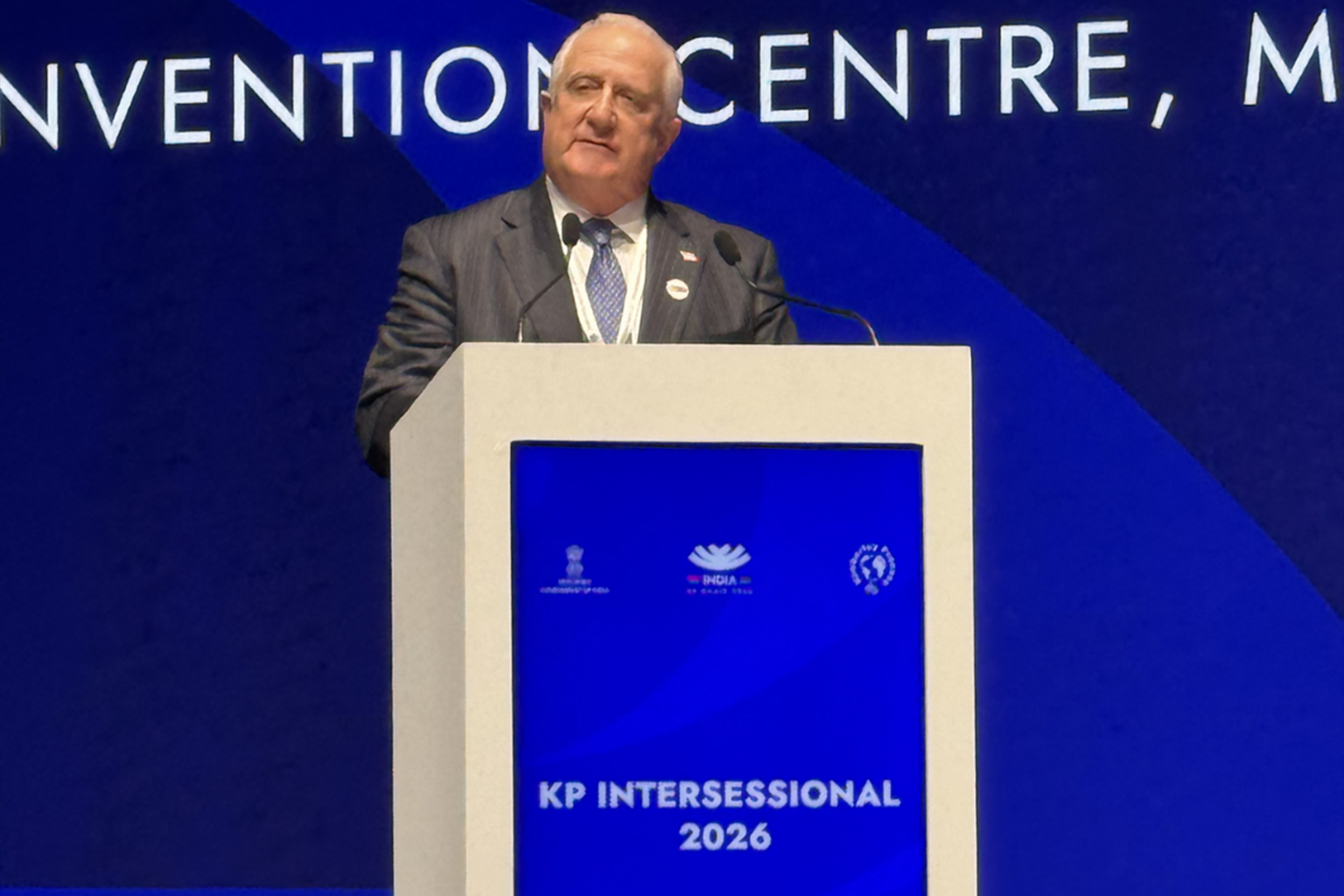
Industry Leaders Push for One Unified Message on Natural Diamonds
At the opening of the 2026 Kimberley Process (KP) Intersessional Meeting in Mumbai, India, newly appointed World Diamond Council (WDC) President Ronnie VanderLinden delivered a direct message to governments, industry leaders, and civil society organizations: the future of natural diamonds depends on rebuilding consumer confidence and speaking with one united voice.
Addressing delegates from across the global diamond sector, VanderLinden stressed that the Kimberley Process must remain focused on its original purpose — supporting confidence in the natural diamond trade and helping consumers understand the value and origin of the diamonds they purchase.
The speech comes at a pivotal moment for the industry as natural diamonds continue to face pressure from slowing luxury demand, changing consumer behaviour, and the rapid growth of lab-grown diamonds.
“Demand for natural diamonds is under pressure,” VanderLinden stated. “People are hearing too many different messages. And lab-grown, synthetic diamonds have changed the conversation.”
Kimberley Process Urged to Modernize Conflict Diamond Definition
One of the strongest themes of the address focused on the need to modernize the Kimberley Process definition of “conflict diamonds.”
VanderLinden acknowledged that while the WDC spent years pushing for reforms during the latest review and reform cycle, the organization ultimately fell short of securing a revised definition. He argued that the current definition no longer reflects the realities of today’s diamond trade or geopolitical environment.
The WDC president praised former WDC President Feriel Zerouki and Kele Mafaole for their efforts in advancing reform discussions, while urging participants not to delay further action until another formal review cycle begins.
Industry observers view the debate around conflict diamond definitions as increasingly important as consumers demand higher levels of traceability, ethical sourcing, and transparency throughout the jewellery supply chain.
VanderLinden emphasized that consumers no longer simply want assurances of value — they want proof of origin, visibility into the supply chain, and a deeper understanding of the economic and social benefits natural diamonds provide producing nations and communities.
For Canadian jewellers and retailers, these discussions carry growing significance as buyers increasingly ask questions about sourcing, sustainability, and authenticity at the point of sale.
Natural Diamonds Need Stronger Global Storytelling
Throughout the speech, VanderLinden repeatedly returned to one core message: the natural diamond industry must improve how it communicates its story to the public.
“We are here for one reason. To be the champion for the natural diamond trade,” he told delegates.
He argued that industry stakeholders must move beyond internal governance discussions and place greater focus on helping consumers understand the broader value of natural diamonds — including the jobs, economic development, and community support they generate worldwide.
The speech also highlighted the need for stronger alignment between governments, industry, and civil society organizations participating in the Kimberley Process framework.
“The Kimberley Process is government, Industry and civil Society. We are three. But we must act as one,” VanderLinden said in closing.
The 2026 KP Intersessional Meeting is expected to continue discussions around reform, funding for the Kimberley Process Secretariat, traceability initiatives, and the future positioning of natural diamonds in a rapidly evolving global luxury market.
For jewellers across Canada, the outcome of these discussions may influence not only sourcing standards and consumer expectations, but also how natural diamonds are marketed and differentiated in the years ahead.
Source: World Diamond Council Address to the Opening of the 2026 Kimberley Process Intersessional Meeting, Mumbai, India, May 11, 2026.


