De Beers Took the Owishi Diamond to Washington With No Price Tag
De Beers showed the 176.29-carat Owishi diamond in Washington and named no price. The ORIGIN programme behind it is already in 30 North American stores.
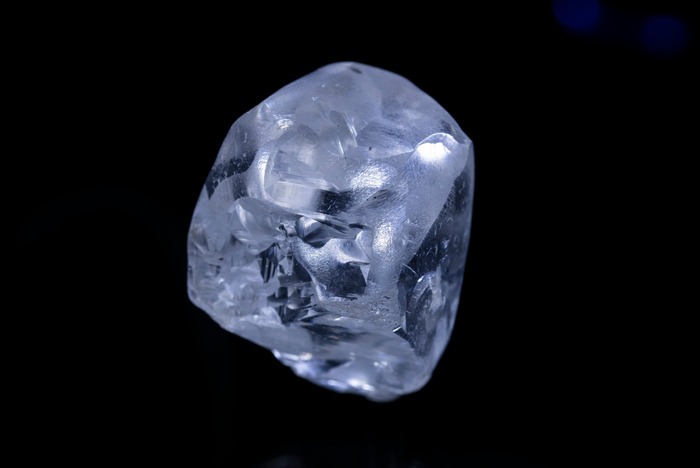
De Beers showed the Owishi diamond, a 176.29-carat Namibian rough stone, in Washington on 17 November and published no price. What the company is selling instead is a QR code that tells a buyer where a diamond was born, already in 30 stores across the United States and Canada.
Namdeb pulled the stone out of the ground on 10 May and told nobody until 30 September. That is more than four months of silence about one of the mine’s biggest finds in two decades. The delay shows how carefully De Beers wanted this story handled.
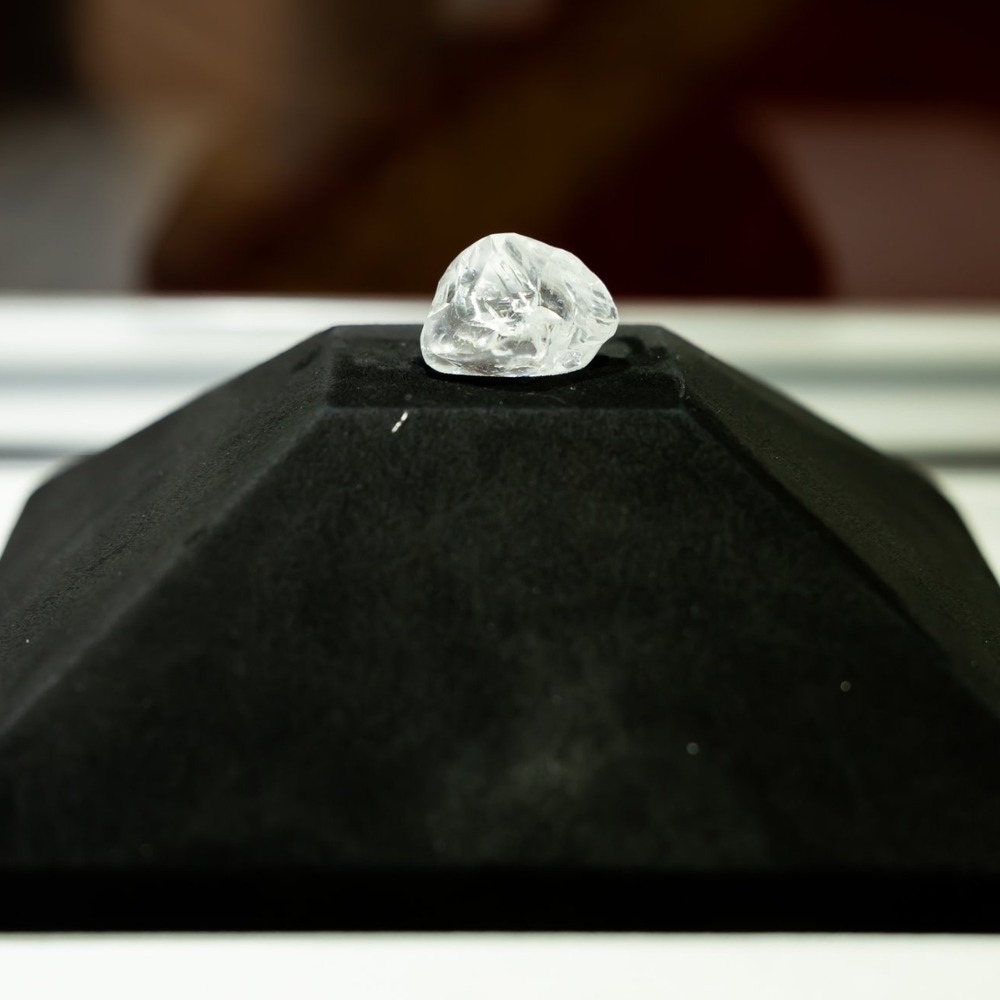
What is the Owishi diamond?
It came out of Namdeb’s Southern Coastal Mine at Oranjemund. De Beers calls it the largest diamond of its kind found there in more than two decades. Namdeb is a 50:50 partnership between the Government of Namibia and De Beers Group. So the find belongs to a national story as much as a mining one. (De Beers Group release)
At 176.29 carats it is more than double the 69.42-carat Taylor-Burton diamond that Richard Burton bought for Elizabeth Taylor in 1969, according to Latination.
President Netumbo Nandi-Ndaitwah named it in Windhoek, drawing on a rare type of honey found beneath the ground in Namibia. She told the Windhoek Observer, “This must be a clear indication that our diamonds are still there.” (Rio Times)
The stone took billions of years to reach the surface. Volcanic eruptions carried it up. Erosion freed it from ancient kimberlite. Then the Orange River washed it hundreds of kilometres to the Atlantic coast.
Why did De Beers take the Owishi diamond to Washington?
The calendar did the persuading. The United States turns 250 next year, and De Beers called a 176-carat stone a symbolic link to 1776. It staged the reception with Grandview Klein Diamond Group at The People’s House. Both countries’ ambassadors attended, along with former Miss Universe Michelle McLean.
The stone now tours the United States. It then returns to Namibia for cutting and polishing at the Grandview Klein factory. Retail is already on the route. J.R. Dunn Jewelers in Lighthouse Point, Florida, is hosting a private showing, according to Latination.
Nobody has said what it is worth. An industry estimate of US$5 million to more than US$25 million is circulating. Rio Times reports it could not be confirmed. Neither De Beers nor Namibia has published a value.
What does ORIGIN De Beers Group mean at the jewellery counter?
This is the part that reaches your showcase. ORIGIN puts a QR code on each stone. A customer scans it and sees the country where the diamond was born. The scan also shows its age, its rarity and the work its sale supports in producing communities. Tracr technology backs the programme, and De Beers says every ORIGIN diamond is natural and traceable to its source.
Owishi is the headline, and the polished stones in retail cases are the product. The rollout reached North America in November 2025. It runs through 19 retail partners operating 30 locations across the United States and Canada, according to Jewellery Monthly. Two sightholders, Grandview Klein and Mahendra Brothers, handle distribution.
Canadian data is thin here. We could not find a Canadian-only count of ORIGIN locations, so the Canadian share of those 30 stores is unknown.
Where does Canada fit in the Owishi story?
Canada has stood in this room before. A Canadian rough diamond, the Foxfire, went on public view at the Smithsonian on 17 November 2016. That was a decade to the day before Owishi. The release described the 187.63-carat Foxfire as the largest uncut, gem-quality diamond mined in North America. (Newswire.ca)
| Stone | Weight | Mine | Washington showing |
|---|---|---|---|
| Owishi | 176.29 carats | Southern Coastal Mine, Namibia | 17 November 2026, The People’s House |
| Foxfire | 187.63 carats | Diavik, Northwest Territories | 17 November 2016, Smithsonian |
Today’s Canadian supply picture is far smaller. Gahcho Kué, about 280 kilometres northeast of Yellowknife, is Canada’s last operating diamond mine. Mountain Province Diamonds agreed on 1 October to transfer its 49 per cent stake after prices stayed weak. De Beers assumed full ownership on 16 October. (North of 60 Mining News)
Output is up all the same. Canadian production rose to 1.1 million carats in the third quarter. The mine processed higher-grade ore, according to Mining Weekly.
Who will own De Beers when Owishi is cut?
Anglo American picked a group led by former De Beers chief Gareth Penny as preferred bidder in July. Talks valued Anglo’s 85 per cent stake at about US$1 billion. The group reportedly includes Namibia, Angola and several large diamond traders, according to BusinessTech. Anglo had already cut the carrying value of De Beers to US$2.3 billion in February.
Prices explain the urgency. In July, De Beers made some of the deepest cuts ever to its official diamond prices, according to Mining Weekly.
Rio Times reports the buyer is not yet final. If the deal closes as described, the government that named Owishi would own part of the company selling it. Canadian Jeweller has also covered De Beers’ shift back toward natural stones.
What should Canadian jewellers do with the Owishi story?
Start with your supplier. Ask whether ORIGIN stones are available to you and which sightholder fills the order. Then go through your natural diamonds. Put a documented country of origin on every tag you can support, because that is the question ORIGIN teaches customers to ask.
Keep price out of the Owishi conversation. No value exists, and a guess in your window becomes your claim.
Last, watch the sale. A new owner could reset sightholder terms and marketing support. Canadian buyers feel that through their suppliers first.
Frequently asked questions about the Owishi diamond
How big is the Owishi diamond?
It is a 176.29-carat rough diamond, more than double the 69.42-carat Taylor-Burton diamond.
How much is the Owishi diamond worth?
No official value has been published. An industry estimate of US$5 million to more than US$25 million is circulating but has not been confirmed.
Where was the Owishi diamond found?
Namdeb recovered it at the Southern Coastal Mine near Oranjemund, Namibia, on 10 May.
Who owns the Owishi diamond?
Namdeb, the 50:50 partnership between the Government of Namibia and De Beers Group, recovered it. No sale has been announced.
Where is the Owishi diamond going next?
It tours the United States and then returns to Namibia for cutting and polishing at the Grandview Klein factory.
What does Owishi mean?
The name draws on a rare type of honey found beneath the ground in Namibia.
How does ORIGIN relate to the Owishi diamond?
De Beers uses Owishi to illustrate ORIGIN, which lets buyers scan a QR code to see a diamond’s country of origin.
What is the largest diamond mined in North America?
When it went on view in 2016, the 187.63-carat Foxfire from Diavik in Canada’s Northwest Territories was described as the largest uncut gem-quality diamond mined in North America.
Sources: De Beers Group via PR Newswire, Rio Times, Jewellery Monthly, BusinessTech, North of 60 Mining News, Mining Weekly, Newswire.ca, Mining Weekly (July prices), Latination.

Author: Olivier Felicio
Olivier Felicio is the founder and publisher of Canadian Jeweller Magazine, Canada's jewellery business publication since 1879. He writes on retail strategy, market data, trade policy and the commercial side of the Canadian jewellery and watch trade, and hosts Time and Shine, Canada's jewellery buying event. Contact: olivier@canadianjeweller.com.