







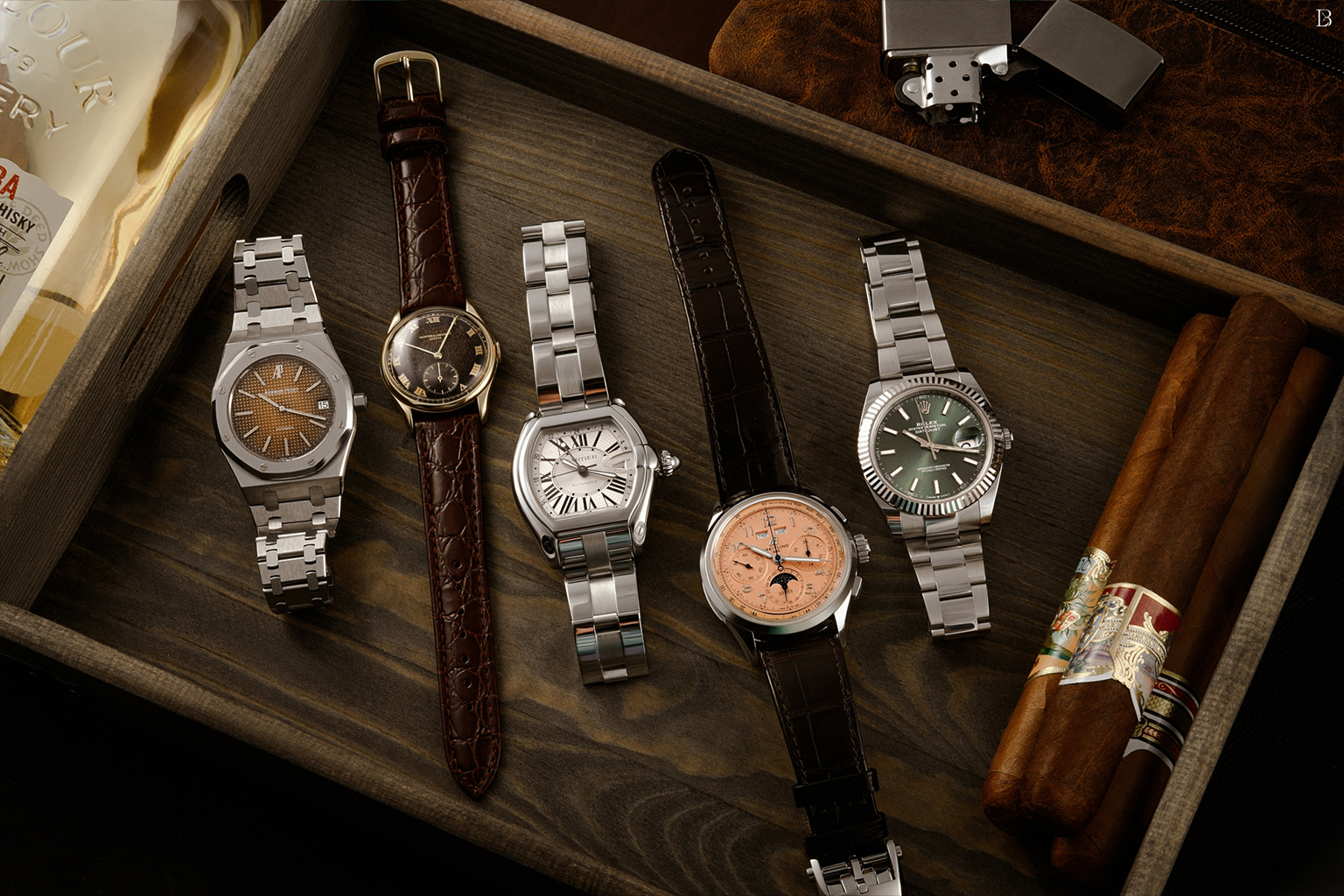
Luxury watches are entering a new phase, and Canadian jewellers sit at the fault line of that transition. The turbocharged, post-pandemic boom has given way to something more sober: a market where volume growth is harder to find, pricing power has to be earned, and the next generation of buyers is younger, more digital and more demanding. The category is not weakening; it is maturing. For jewellers, that is both a challenge and a strategic opening.
From sugar high to sustainable growth
For several years, the global watch narrative was straightforward: demand exceeded supply. Allocation lists stretched on for years, and almost anything with a Swiss logo found a home. That era is fading. Exports remain high in value terms, but the easy gains are gone. Unit volumes are drifting lower, especially at the lower and mid tiers, and brands are feeling the impact of regional volatility, tariffs and shifting consumer confidence.
Canadian retailers are encountering the same headwinds as the broader luxury sector: higher interest rates, more cautious discretionary spending and rising operating costs. What has changed most, however, is the customer’s mindset. Today’s buyer arrives armed with international price comparisons, auction results and forum chatter. They know which models are trading at a premium and which are available at a discount half a world away. Brand prestige and a nice window are no longer enough; every purchase must be justified on substance.
Fewer references, higher stakes
In response, the leading watch houses are quietly rewriting their playbook. The long-term direction is upmarket. Production is being disciplined rather than maximized. Brands are pruning the bottom of their ranges, investing more in mechanical movements and complications, and tightening the spread of references around core icons.
For Canadian jewellers, that translates into a very different buying and selling environment. Allocations of high-demand steel sport pieces and versatile everyday luxury models are thinner. Entry-level Swiss offerings are less plentiful. Each watch that does make it into the showcase represents more capital, more storytelling potential and more pressure to sell it at full price.
This is pushing retailers toward a more editorial mindset. The most successful stores do not look like warehouses; they look like point-of-view portfolios. The question is no longer “How many SKUs can we carry?” but “Which specific executions of each brand’s story best fit our clients, our city and our long-term positioning?”
The pre-owned power play
The most disruptive force in the category is not a new material or complication. It is the rise of pre-owned and certified pre-owned. What was once the domain of a few specialists and grey dealers has moved into the centre of the market. Major maisons now operate their own certified pre-owned programmes or partner with platforms that do. The goal is clear: to capture more of the value chain, control the narrative around authenticity and condition, and use pre-owned to onboard younger customers at a lower price point.
For Canadian retailers, this is no longer optional. A strategic pre-owned business can do three things at once. It brings in clients who might be priced out of new pieces but are serious about horology. It provides an upgrade path, allowing long-time customers to trade into higher-value references without leaving the store ecosystem. And it sends a powerful signal about the product’s confidence: these watches are built to be serviced, resold, and worn for decades.
The execution matters. A cluttered case of mixed-condition trade-ins erodes trust. A curated, documented and professionally presented pre-owned selection, managed with clear policies and robust after-sales support, does the opposite. It positions the retailer as a long-term partner in a client’s collecting life rather than a one-transaction merchant.
The next luxury watch customer
At the same time, the profile of the luxury watch buyer is shifting. The category remains aspirational, but it is no longer the preserve of one demographic. Younger professionals, women and more diverse communities of collectors are reshaping demand and taste.
Case sizes are drifting back toward a 36 to 40 millimetre sweet spot that serves a broader range of wrists. Brands are moving away from overtly gendered designations and toward pieces that rely on proportion, texture and detail rather than clichés about “ladies’” or “men’s” styles. Clients are less interested in fitting a stereotype and more interested in matching a watch to their lifestyle and personal narrative.
For Canadian jewellers, this is not a soft cultural issue; it is a business one. Showcases that segregate products by gender or push women into tiny quartz pieces risk leaving money on the table. Sales teams that feel comfortable discussing fit, ergonomics and design language with any client, regardless of gender, age or background, turn more conversations into meaningful sales. Marketing that shows a wider range of people wearing serious watches is not only inclusive; it is strategically aligned with where demand is going.
Mechanical time in a digital world
Smartwatches remain dominant in the mass-market wearable tech market. They command the conversation in fitness and notifications, and they will continue to do so. Mechanical watches cannot compete on features—and they do not need to. Their advantage is that they occupy a different psychological and economic space.
A smartwatch is a device on a three- to five-year replacement cycle. A mechanical watch is closer to an analogue asset, a durable object that can be maintained and passed on. That difference is not an abstraction. It shows up in how clients think about value, in how they justify a four- or five-figure spend, and in how they feel when they put a piece on their wrist.
The smartest Canadian retailers have stopped framing mechanical watches as rival gadgets. Instead, they position them as a counterweight to the always-connected world, a tangible link between engineering, craft and personal history. In an era when many high-net-worth individuals are deliberately limiting screen time, that story resonates.
Sustainability, provenance and the business of trust
Another quiet revolution is taking place in how watches are made and marketed. Younger luxury buyers may not all be activists, but they are highly attuned to questions of provenance and impact. They want to know where metals come from, how supply chains are governed and what happens to a product at the end of life.
Watch brands are responding with recycled and traceable materials, more detailed narrative around sourcing and a renewed emphasis on repair and refurbishment. It is a logical move: long-life products with clear service pathways fit neatly into a lower-waste philosophy, and they give luxury houses a way to talk about responsibility without abandoning aspiration.
For retailers, this is a trust multiplier. Staff who can explain not only the calibre number and power reserve but also the brand’s approach to sourcing, service and longevity are far more likely to close serious buyers. Sustainability framed as intelligent ownership—own less, own better, maintain what you own—sits comfortably alongside the core values of fine jewellery and watches.
Distribution, data and the experience gap
The final piece of the puzzle is distribution. Major brands are rebalancing their networks toward mono-brand boutiques and tightly controlled shop-in-shops in strategic locations. Multi-brand points of sale remain essential, but the bar is rising. At the same time, brands are investing aggressively in data, clienteling and integrated online–offline experiences.
The result is an arms race in experience. Boutiques are evolving into hybrid spaces that mix sales with hospitality, education and occasional events. Launches are choreographed across livestreams, private previews and tailored outreach to top clients. Even when the transaction happens in-store, the relationship often begins online and is sustained by digital touchpoints.
This dynamic can feel daunting, but it also creates room for differentiation. No global brand knows a local market as well as the retailer who has lived it for decades. The advantage lies in combining that local knowledge with higher standards of presentation, better data discipline and a more deliberate client journey.
In practice, that means treating watch sales less as isolated events and more as entries into a long-term ledger: who bought what, when, why, and what they might be ready for next. It means viewing every strap change, cleaning or service visit as an opportunity to reinforce loyalty. And it means designing small but memorable experiences—appointments, trunk shows, collector evenings—that make the store feel like a hub, not just a point of sale.
The Canadian opportunity
The watch market is not reverting to some earlier, simpler era. It is evolving toward greater professionalism on all sides. Brands are refining their catalogues, asserting more control over distribution and investing in pre-owned, sustainability and data. Consumers are sharper, more diverse and more demanding. The middle is getting squeezed.
Yet for jewellers who are willing to think more like portfolio managers and less like order takers, this period is rich with opportunity. A curated mix of new and certified pre-owned, a clear point of view on brands and references, a serious investment in staff education and a higher standard of client experience can turn volatility into advantage.
The post-boom market will not reward retailers who simply wait for traffic. It will reward those who treat watches as what they have quietly become: a global luxury asset class powered not only by steel and gold, but by information, trust and long-term relationships.


