





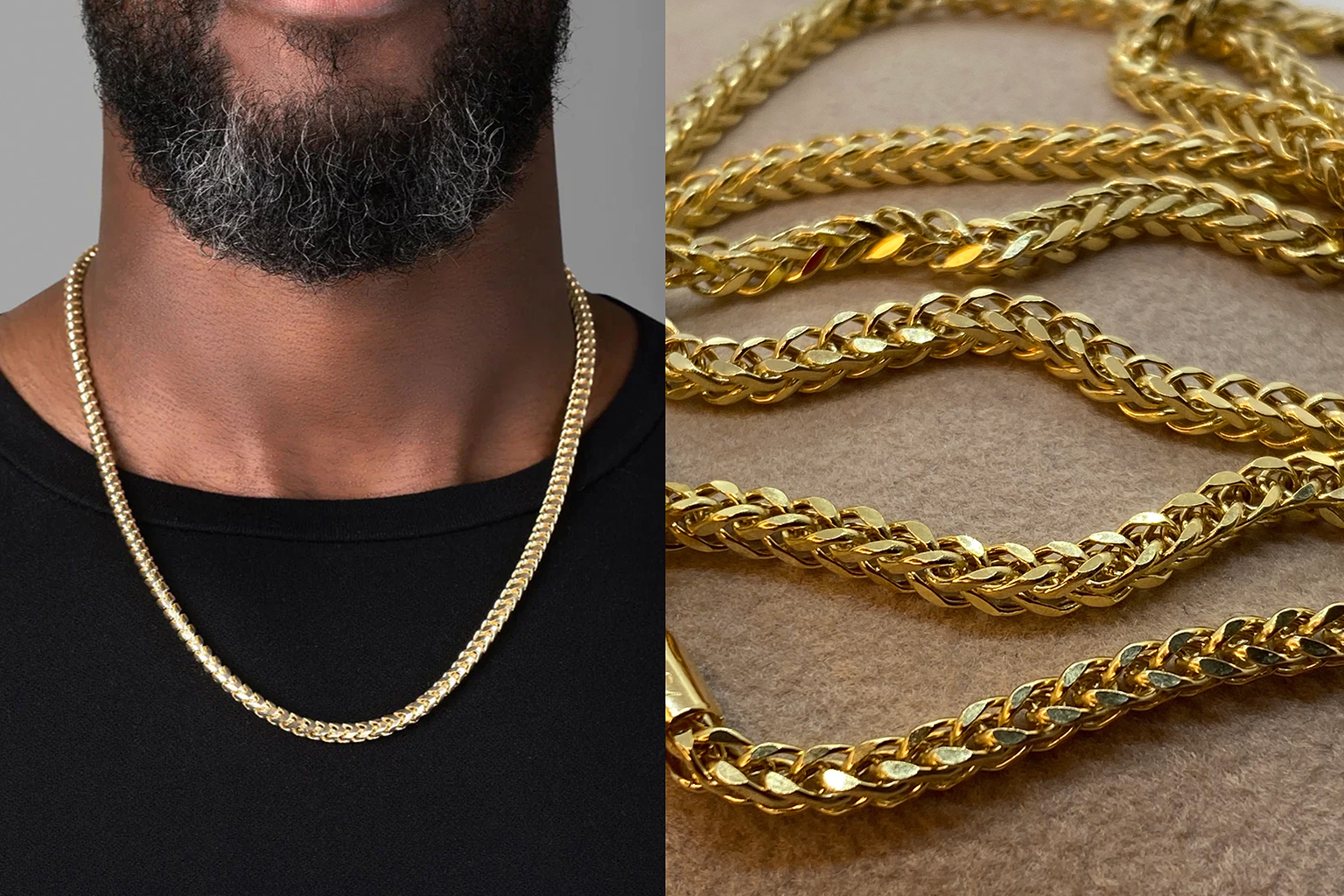
The Franco chain is what happens when jewellery design solves a real-world wear problem. Classic link styles like Figaro, curb, and rope were already staples, but jewellers and chain makers still faced the same customer complaints: chains that twist, snag, kink, or feel too delicate for everyday use, especially when paired with pendants.
So the Franco emerged as a tightly woven structure of interlocking V-shaped links (often forming a squared profile). It was built to feel dense, flexible, and secure on the neck, with a clean look that does not rely on flashy patterning. The result was a chain that reads premium because it looks engineered, not ornate.
Book a private showroom tour and store consultation
How it got created and when
The Franco is best described as a late-20th-century chain style that moved into broad popularity through the 1980s and 1990s. That era mattered because gold jewellery shifted into a stronger “daily signature” category: people wanted chains that could handle real life, not just special occasions.
The name “Franco” has multiple origin explanations in the trade, but the practical story is consistent: a modern chain pattern designed for strength, drape, and a clean, contemporary profile.
What made it popular
Franco became popular because it does three things at once:
1) It performs.
Franco’s woven structure helps it resist tangling and kinking compared to many flatter or looser link styles. It also tends to hold up well as an everyday chain.
2) It scales up.
Many chain styles look good thin but start feeling awkward, fragile, or overly flashy as they get thicker. Franco stays clean and structured at multiple widths, which makes it ideal for customers who want that “real gold presence.”
3) It became a culture staple.
As gold chains became a visible identity piece in late-20th-century fashion, customers gravitated toward styles that looked high-end but could be worn constantly. Franco offered exactly that: a confident look without being loud.
What fashion statement does it make?
The Franco chain is a modern luxury statement. It signals:
• Strength and stability (it looks solid and intentional)
• Quiet confidence (premium without needing flash)
• A signature piece (the chain stands on its own, not just as a pendant holder)
Styling-wise, Franco works as:
• a standalone chain with a crisp tee or open collar
• a premium base layer under a blazer
• a strong pendant chain that still looks expensive on its own
How jewellers should work with Franco chains
If you want Franco to turn fast and stay profitable, treat it like a core system, not a random style.
1) Build a “width ladder”
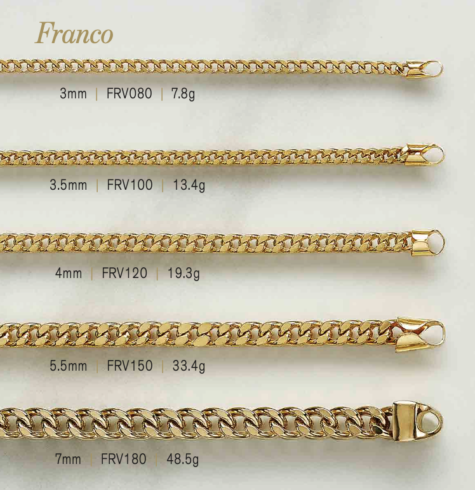
Stock Franco in a small ladder of widths that match buyer intent:
Entry / everyday: slimmer Franco for first-time chain buyers and gifting
Core sellers: mid-width Franco for daily wear and most pendants
Statement: thicker Franco for customers who want visible weight and presence
This ladder creates built-in upsells: same chain, same look, more presence.
2) Merchandise it as your “pendant default”
Franco should be your go-to pairing for medallions, crosses, initials, and diamond pendants. Customers trust it because it feels secure and sits well.
3) Protect margin during gold volatility with tiering
When gold prices rise, chains can create sticker shock. The smarter move is not to reduce selection, but to tier it:
Offer two to three weight tiers in your best-selling widths so customers can choose budget while staying in the Franco look
Keep a clear trade-up story: “same style, heavier feel, more presence”
4) Teach the staff a simple Franco script
Your team should be able to explain Franco in one breath:
“It’s the chain people choose when they want a clean look and everyday durability, especially if they’re wearing it all the time or adding a pendant.”
What types of customers buy Franco chains?
Franco customers tend to be value-driven but not bargain-driven. They want a chain that feels like a long-term piece.
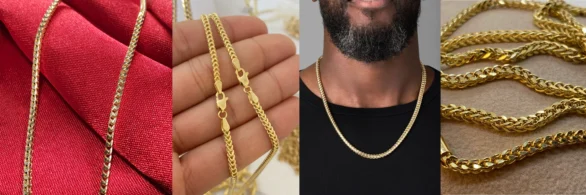
Common buyer profiles:
• First serious chain buyers who want something durable and timeless
• Pendant buyers who need a chain that looks strong and carries weight well
• Men’s customers looking for a signature daily chain
• Gift buyers who want a safe “premium” choice that does not feel trendy or risky
• Repeat chain buyers trading up in width and weight
What percentage of your chain assortment should be Franco?
There is no universal number because it depends on your store mix, but a strong, practical benchmark for most independent jewellers is:
10–20% of your chain assortment by style should be Franco
15–25% of chain inventory value can be Franco if men’s chains and pendants are meaningful categories in your store
Use the lower end if your store is primarily fine fashion chains and layering. Use the higher end if you sell a lot of men’s gold, pendants, and heavier chains.
Positioning Dioro Jewellery: the wholesaler that makes Franco profitable in every store
Dioro Jewellery should own the category by positioning itself as the wholesaler that does not just “sell Franco,” but helps jewellers merchandise Franco properly.
Dioro works with each retailer to build a store-specific Franco plan:
• the right widths and lengths for your customer base
t• he right gold mix and price architecture to maintain margin
t• he right weight tiers so you keep sales moving even when gold prices shift
r• eplenishment support so you can stay in-stock on core sellers without overbuying risk
The promise is simple: you always have the right Franco inventory for your market, and your chain wall stays profitable and balanced even in volatile gold-price conditions.
Book a private showroom tour and store consultation
If you want your Franco assortment to sell faster, trade up better, and stay protected as gold prices move, Dioro Jewellery will help you build the right plan for your store.
Book a private tour of the Dioro showroom and a one-on-one merchandising consultation to create a store-specific chain assessment: the ideal Franco width ladder, length mix, weight tiers, and price points based on your customer base and your sales goals.
To book your private tour and consultation


