




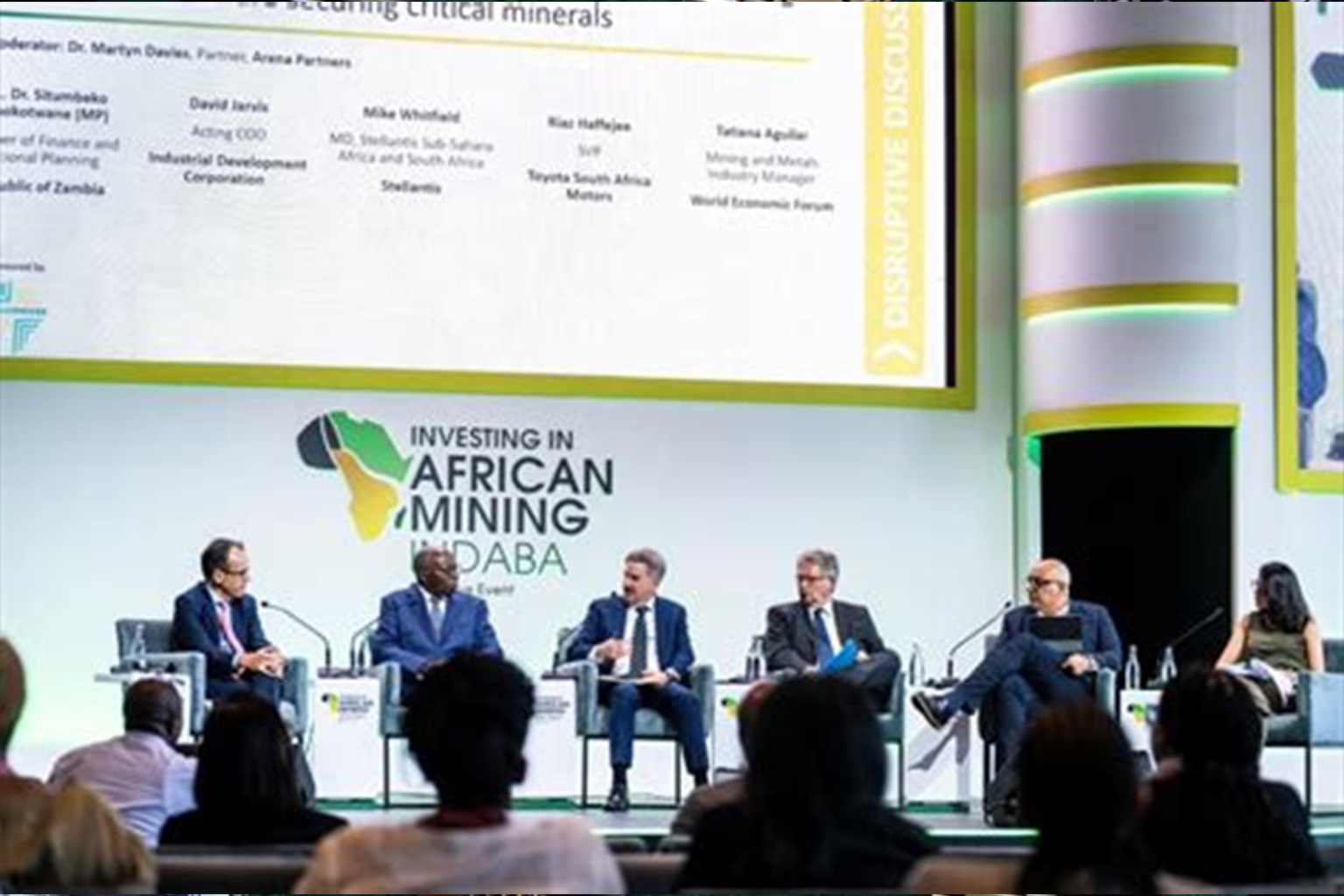
Cape Town’s African Mining Indaba 2026 delivered a clear signal: the natural diamond sector is tightening coordination, expanding participation, and sharpening its consumer-facing message at category level. The Republic of Namibia has formally joined the Luanda Accord, while India’s Gem and Jewellery Export Promotion Council (GJEPC) and Dubai Multi Commodities Centre (DMCC) have each taken formal steps that set them on a path toward Natural Diamond Council (NDC) membership by May 1, 2026. (Only Natural Diamonds)
This matters because the Luanda Accord isn’t another industry statement—it’s a funding mechanism. Signatories commit to sustained investment in generic marketing for natural diamonds, anchored by the NDC’s global education and brand-building mandate. The goal is straightforward: rebuild long-term consumer confidence and preference for natural diamonds at a time when pricing pressure, product confusion, and lab-grown competition have altered how shoppers interpret “diamond value.” (Only Natural Diamonds)
From Luanda to Cape Town: what the Accord is trying to fix
When the Luanda Accord was launched in June 2025, it framed a collective response to a category problem: even the best brands struggle if the category narrative weakens. The Accord’s core structure is a shared contribution model—commonly described as 1% of annual rough diamond revenue—to support global natural diamond marketing through the NDC. (Only Natural Diamonds)
That “category marketing” emphasis is strategic. It’s less about promoting any one producer and more about reinforcing what only natural diamonds can claim: geological rarity, finite supply, and a provenance story that connects origin communities to end consumers—without forcing retailers to do all the heavy lifting alone at the showcase.
Why Namibia joining is a bigger deal than it looks
Namibia’s signature adds weight because the country is synonymous with high-value goods—especially marine diamonds—and has a diamond history that reaches back to 1908. The NDC described Namibia’s decision as a strong leadership signal from a major producer nation, strengthening the industry’s ability to communicate the broader impact story behind natural diamonds. (Only Natural Diamonds)
Namibia’s government positioned the move as both an economic strategy and a narrative responsibility—ensuring that the value created by natural resources continues to translate into national development. (Only Natural Diamonds)
For jewellers, the subtext is important: a producer country is explicitly investing in demand creation, not only supply. That is the shift the Luanda Accord is built to accelerate.
India and Dubai moving toward the NDC table changes the global math
Two of the most structurally influential parts of the diamond pipeline are now aligning more formally with the NDC.
GJEPC and the NDC signed a Memorandum of Understanding that sets out a pathway for GJEPC to become an NDC member by May 1, 2026, subject to agreement on funding structure and completion of legal/regulatory requirements. The timeline is not accidental—both parties have pointed to working in sync ahead of the 2026 holiday season. (GJEPC India)
DMCC, positioning itself as the world’s largest diamond trading hub, signed a declaration/letter of intent reflecting its move toward NDC membership on the same May 1, 2026 target. DMCC’s framing focused on strengthening how natural diamonds are presented to consumers, supporting long-term stability in the trade, and reinforcing the connection between producing nations and international markets through Dubai. (dmcc.ae)
Put simply: when a leading manufacturing powerhouse (India’s trade body) and a leading trading hub (Dubai) align with a global marketing engine (NDC), the category gets more consistent messaging—faster—across more touchpoints, from polished supply to retailer education.
What the Natural Diamond Council is positioned to deliver next
The NDC’s role is often misunderstood at retail level. It isn’t a grading body. It isn’t a compliance authority. It’s a category marketing and education organization designed to influence consumer demand, modernize the natural diamond story, and give the trade a unified language that resonates with today’s buyers. (Only Natural Diamonds)
The Luanda Accord expands the NDC’s runway by widening the base of contributors and stakeholders. The more diverse the coalition—producer governments, trade organizations, trading hubs—the easier it becomes to keep messaging coherent and continuous rather than seasonal and fragmented.
What this means for Canadian jewellers: merchandising clarity, not just “more marketing.”
For Canadian retailers, the practical impact won’t show up as a single campaign headline. It will show up as improved selling conditions: clearer consumer language, more consistent category-level education, and a stronger platform for value-based conversations in-store.
That matters in Canada because natural diamond supply narratives are tightening at the same time shoppers are asking harder questions. Canada’s own diamond chapter is entering a new phase, with mine life and production uncertainty increasingly part of the national story—an environment where “scarcity,” “legacy,” and “traceable origin” can become premium levers if communicated with discipline. (Financial Times)
The risk, of course, is that the category remains bifurcated in the consumer’s mind: “diamond equals commodity” versus “lab-grown equals smart deal.” The opportunity is to reframe natural diamonds away from price-per-point and toward meaning-per-moment—while maintaining transparent, plain-language disclosure for every product category you carry.
What to watch
May 1, 2026 is the date repeatedly referenced for GJEPC and DMCC’s intended NDC membership. If those accessions complete on schedule, expect the NDC’s pre-holiday cadence to intensify—more retailer-ready assets, more unified messaging across major global hubs, and greater pressure on the entire value chain to consistently support category marketing rather than episodically. (GJEPC India)
For store owners, the strategic question is not whether generic marketing “works.” It’s whether your in-store language is ready to convert that demand into confident purchases—especially for bridal, milestone gifting, and premium self-purchase where emotional justification matters as much as specs.
Quick answers for search and voice
What is the Luanda Accord? It’s an industry-and-government commitment to fund global, generic marketing for natural diamonds, commonly structured around a 1% contribution model, delivered through the Natural Diamond Council. (Only Natural Diamonds)
Who has signed so far? Namibia has now joined Angola, Botswana and the Democratic Republic of Congo as signatories referenced in current announcements, with broader industry stakeholders also aligned through the Accord. (Only Natural Diamonds)
What is changing in 2026? GJEPC and DMCC have formal pathways to NDC membership, targeting May 1, 2026, to enable deeper collaboration ahead of the 2026 holiday season. (GJEPC India)
Why does NDC membership matter? It increases coordination and funding for category-level consumer education, helping retailers tell a consistent natural diamond story across markets. (Only Natural Diamonds)
Is this a response to lab-grown growth? Yes—public reporting and industry statements link the push to strengthening natural diamond demand amid lab-grown competition and changing consumer behaviour. (Reuters)
What should jewellers do now? Align sales language to clear disclosure, provenance storytelling, and value framing that connects rarity and origin to the customer’s moment—not just the certificate.


