







How Adam, Tony, and Alec each reveal a different truth about modern jewellery-store protection
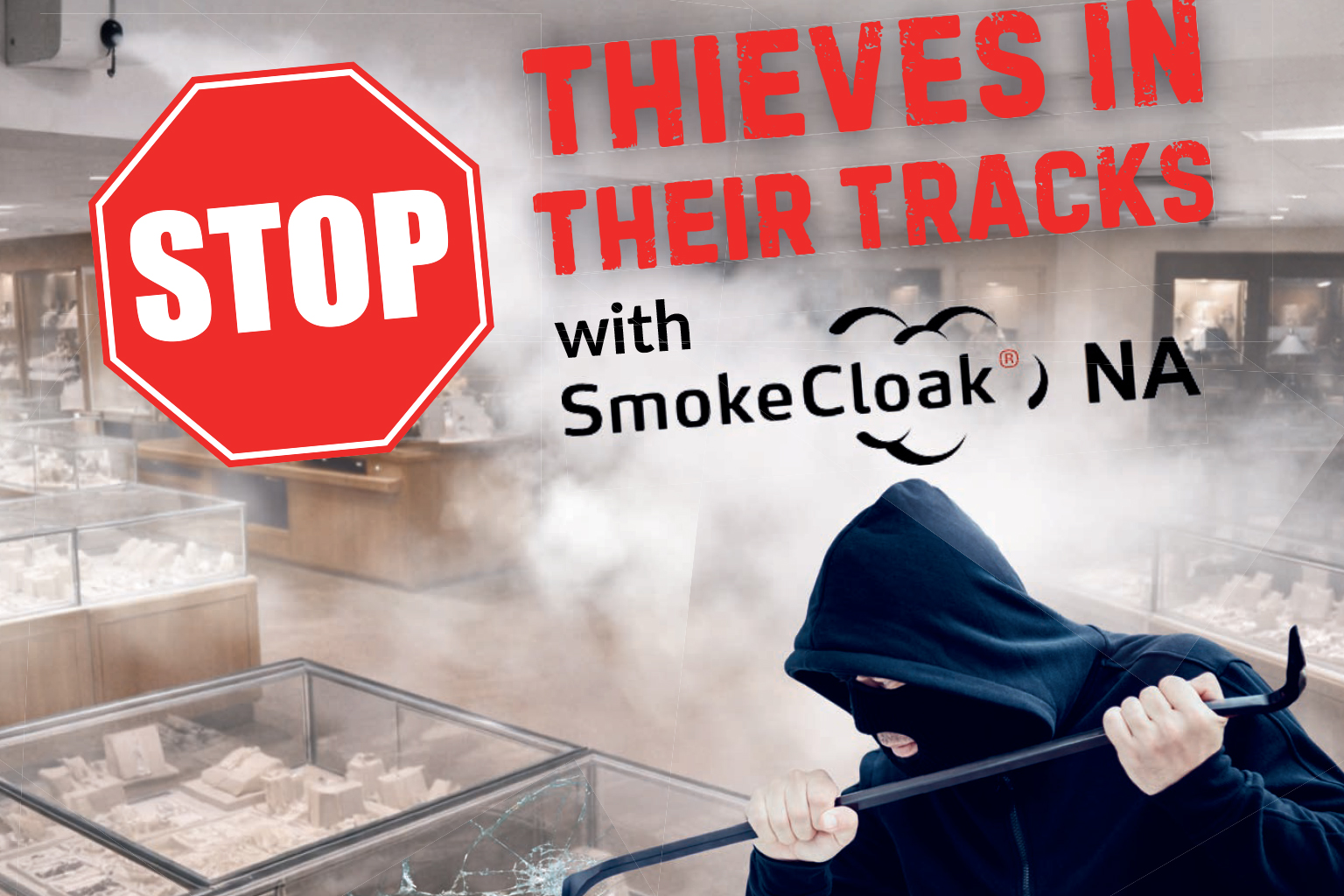
Jewellery store security has moved far beyond cameras, locks, alarms, and hoping for the best. Across the industry, more retailers are now thinking in layers: deterrence, delay, disruption, and staff safety. That shift is not happening in theory. It is being driven by the reality that some jewellery crimes unfold in seconds, leaving very little time for conventional systems to do more than record what has already happened. The Jewelers’ Security Alliance recently described one smash-and-grab in Jersey City as unfolding in about 10 seconds, with more than $1 million in merchandise taken.
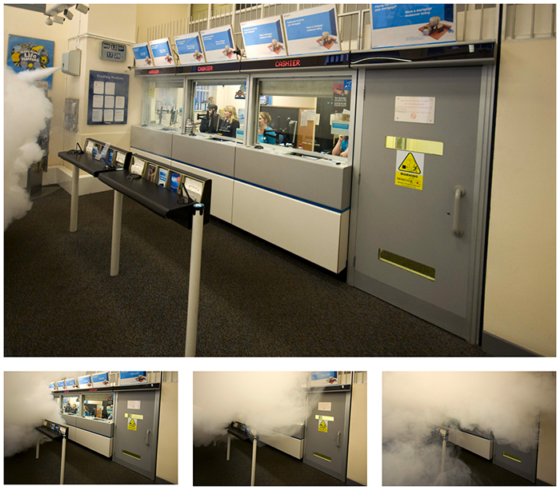
That is where SmokeCloak enters the conversation in a different way. According to the company’s materials, the system is designed to fill a protected area with dense fog in a matter of seconds, reducing visibility to less than 30 centimetres and creating what it describes as an “impenetrable cloud” during the critical gap between alarm activation and police or security response. SmokeCloak also says the fog can be aimed directionally so intruders still have a corridor to leave, an important point where staff safety is concerned.
But the real editorial value of SmokeCloak is not only what it does. It is how differently that value can present itself depending on the jeweller, the store, and the inventory at risk. That becomes clear when looking at three very different businesses: Adam at Bill LeBoeuf Jewellers in Barrie, Tony at Bisogno Jewellers North Ltd., and Alec at Van Rijk in Toronto. Each business faces a different version of the same question: what kind of protection actually works when the threat is real and the response window is painfully short?
Bill LeBoeuf Jewellers: a legacy store that needed active disruption
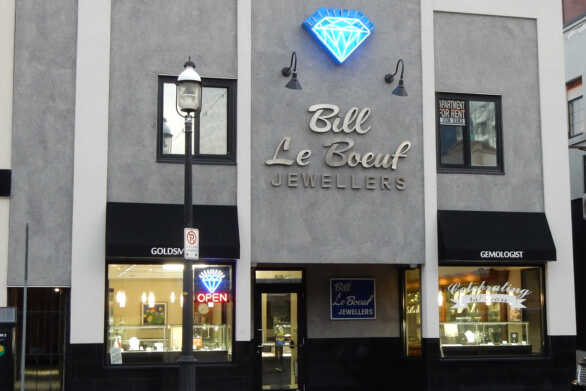
Bill LeBoeuf Jewellers represents the kind of legacy independent store where continuity itself becomes part of the brand. It is a business built on trust, familiarity, and long-standing customer relationships. In that environment, visible security matters, but Adam’s experience shows that visibility alone is not enough. A police presence nearby, cameras, and the natural deterrent of a well-known downtown location can still leave a dangerous gap if offenders are already inside and moving fast.
That is why prevention, in Adam’s case, became inseparable from disruption. The issue was not simply identifying a threat. It was interrupting a robbery before intruders could move through showcases, access merchandise, and turn seconds into permanent loss. SmokeCloak fit that context because it was not merely passive security. It was designed to change the environment in real time and deprive the intruders of the ability to see clearly enough to complete the theft. According to SmokeCloak’s jeweller’s case-study material, one installation stopped armed robbers from taking anything when the system activated, and the intruders left within 14 seconds.
That matters because it shifts the security conversation from evidence collection to outcome control. For a traditional jewellery store, where merchandise is displayed, browsed, and sold in an open retail setting, the critical question is often what happens in the first few seconds after the threat begins. Adam’s story underscores a broader industry point: the strongest systems are the ones that do not wait politely in the background while the robbery runs its course. They intervene.
Bisogno Jewellers North Ltd.: practical protection for a relationship-driven business
Tony’s story highlights a different side of the same issue. His concern was not only whether a system could stop a robbery. It was whether it could fit the day-to-day reality of a long-established, owner-operated jewellery business built on personal service, trust, and operational rhythm.
For jewellers like Tony, security cannot feel detached from the customer experience or burdensome to daily operations. A system may look impressive in a brochure, but if it feels impractical, disruptive, or difficult to live with, adoption becomes harder. SmokeCloak’s positioning addresses that concern by presenting itself as a system that integrates with existing alarm, CCTV, and access-control infrastructure while remaining automatic in use.
That is an important distinction. In Tony’s context, the value of SmokeCloak is not only tactical. It is psychological and operational. It offers a form of protection that can sit inside an independent jewellery business without asking the owner to redesign the character of the store around fear. It becomes part of the operating environment rather than a constant visual reminder of threat. For businesses built on warmth, reputation, and repeat relationships, that balance matters. It gives the owner and staff something difficult to measure but easy to understand: confidence that a meaningful layer of protection exists if something goes wrong.

Van Rijk: When rarity changes the entire security equation
Alec’s section changes the story completely.
Van Rijk has publicly positioned itself as a family-owned bricks-and-mortar store in Toronto since 1985, with what it describes as Toronto’s largest selection of pre-owned luxury and branded watches and jewellery. Its site and editorial content consistently frame the business around estate jewellery, antique jewellery, vintage pieces, and pre-loved luxury items, while a recent company article describes Alex Van Rijk as the owner and notes his passion for pre-owned luxury watches and antique jewellery, backed by more than 40 years of experience.
That business model changes the meaning of security.
In many jewellery stores, a robbery is devastating, but at least some stock may be replaced through suppliers, remakes, or future purchasing. At Van Rijk, much of the merchandise is fundamentally different. The value is tied not only to metal, stones, or brand name, but to age, provenance, rarity, and the fact that many pieces are no longer made. The company’s own inventory presentation reinforces that point, with vintage diamond rings, rare Patek Philippe watches, estate jewellery, and high-end pre-owned pieces positioned as the core of the business rather than the exception.
That is why Alec’s environment has to be understood almost like a museum that sells.
This is not just about protecting expensive stock. It is about protecting merchandise that may be quasi-irreplaceable. A stolen antique jewel or rare vintage watch cannot simply be reordered from a supplier catalogue. Once it is gone, the loss is not only financial. It is curatorial. It is historical. It is the loss of something the market may not offer back again in the same form. In that context, security becomes less about conventional loss prevention and more about preservation.
That is where SmokeCloak takes on a deeper meaning for Alec than it might for many other jewellers. In the company’s jewellers’ literature, the stated goal is clear: ensure intruders leave immediately, without taking or damaging stock, while staff remain safe and secure. The fog is designed to remove the intruder’s ability to see within seconds, disorienting movement and buying time until police or a response team arrives. In a store where rarity itself is part of the inventory value, that kind of interruption is not merely helpful. It is vital.
For Alec, then, the logic is sharper than simple prevention. Staff can be trained. Procedures can be rehearsed. Response can be structured. But the inventory cannot be recreated once it disappears. That is why the SmokeCloak proposition lands differently in a business like Van Rijk. Here, it is not only a layer of security. It is a way to protect the unrepeatable.
One system, three jewellers, three very different realities
What makes these three stories compelling is that they show SmokeCloak succeeding in very different retail environments, for very different reasons.
For Adam, the value was immediate disruption in a legacy downtown retail setting where fast-moving theft demanded an equally fast response.
For Tony, the value was practical confidence: protection that could work inside the real rhythm of an independent jewellery business without overwhelming it.
For Alec, the meaning goes even further. His inventory is not simply expensive. It is rare, historical, and often quasi-irreplaceable. In his environment, security is not only about stopping theft or protecting margins. It is about preserving pieces that may never be sourced again in the same form.
That is the larger lesson connecting all three jewellers. Modern jewellery security cannot be built around generic assumptions or one-size-fits-all solutions. It has to reflect the actual business in front of it: the layout, the location, the operating style, the customer environment, the staff concerns, and the type of inventory at risk. Cameras still matter. Locks still matter. Guards may matter. But systems that actively disrupt crimes in progress are now part of a much more serious and modern security conversation.
And what Adam, Tony, and Alec show together is this: the strongest security solution is the one that adapts to the store, protects the people, and reflects the true nature of what is at risk. In Alec’s case, especially, that means understanding that some jewellery inventory is not just merchandise. It is history on display.


