







Canada has 507 fewer jewellery stores than it did a decade ago, and Quebec lost 147 of them, the steepest fall of any large province. However, those are net figures, openings minus closings. Model the churn underneath, and jewellery store closures in Canada most likely total 1,500 to 2,500 over ten years.
François Gervais chose Christmas Eve to lock up for good. For 60 years, his family’s bijouterie had anchored the same corner of Granby. So he gave it one last holiday season on purpose: a final Christmas, he told La Voix de l’Est, for the customers whose rings and repairs had crossed his counter for three generations.
Business was healthy. In fact, investors from Ontario had come asking. He still said no, retired at 65, and corrected anyone who blamed the internet. The store was not defeated. It simply ran out of heirs.
Drive an hour in almost any direction and the pattern repeats. In the same town, Mario Brouillette had already shut his 85-year-old bijouterie, worn down at 70 by six-day weeks. Then Carmen Rivet of Saint-Lambert closed the books on four decades this past February, saying she was at peace.
Meanwhile, in La Baie, Jean Guérin ended a 105-year family story with sales going very well, because after 47 years at the bench he could find no successor. His diagnosis was the sharpest: Quebec no longer teaches gemology, and Montreal’s watchmaking school closed decades ago. Consequently, the stores are aging out with their owners.
That is the closure story behind Canadian jewellery retail. Moreover, the numbers underneath it are larger than anything the industry has been told.
How many jewellery store closures has Canada seen since 2015?
The national number appears in no press release. Instead, it has to be assembled from a decade of Statistics Canada business-count tables. Once assembled, it is blunt: 3,049 employer jewellery stores stood in December 2015, while only 2,542 remained in December 2025. In other words, one storefront in six is gone.
Even that figure flatters the trade. In 2022, Statistics Canada folded online-only sellers into the same category as physical stores, so the count jumped by 116 in a single year with no storefront boom in sight. Strip out the reclassification, therefore, and the bricks-and-mortar decline runs steeper than the official series admits.
What is the real number of jewellery store closures?
Net figures bury the churn, because every new opening erases a closure from the record. The closures can still be estimated, however, and the industry deserves the estimate.
First, apply Statistics Canada’s measured retail exit rates of 7.5 to 9.4 per cent a year to the jewellery store base. Then test a cautious scenario in which jewellery stores fail at half the retail average, since they are older, better capitalised and family-held. The table shows both.
| Scenario | Canada, closures per year | Quebec, closures per year | Canada, 2015 to 2025 | Quebec, 2015 to 2025 |
|---|---|---|---|---|
| Retail-average exit rate (7.5 to 9.4 per cent) | 200 to 300 | 40 to 55 | 2,000 to 3,000 | 400 to 550 |
| Conservative half rate | 100 to 150 | 20 to 28 | 1,000 to 1,500 | 200 to 280 |
The most probable decade total lands between the scenarios: 1,500 to 2,500 gross closures in Canada and 300 to 500 in Quebec, against net losses of 507 and 147. Put plainly, for every store the ledger admits losing, two to four more turned off the lights and were replaced on paper by something newer.
These are modelled probabilities rather than counts. Because no Canadian agency measures the real number, Canadian Jeweller states that gap openly.
Is Quebec losing more jewellery stores than the rest of Canada?
Yes, and by a clear margin. Quebec held 710 employer jewellery stores in 2015 but holds 563 today, a 20.7 per cent net decline against 15.4 per cent everywhere else. On the same exit-rate math, roughly 40 to 55 Quebec stores go dark for good each year.
| Province | Dec 2015 | Dec 2025 | Net change | Per cent |
|---|---|---|---|---|
| Canada | 3,049 | 2,542 | -507 | -16.6% |
| New Brunswick | 68 | 43 | -25 | -36.8% |
| Saskatchewan | 71 | 48 | -23 | -32.4% |
| Alberta | 383 | 296 | -87 | -22.7% |
| Nova Scotia | 68 | 53 | -15 | -22.1% |
| Quebec | 710 | 563 | -147 | -20.7% |
| Manitoba | 84 | 67 | -17 | -20.2% |
| Ontario | 1,179 | 1,009 | -170 | -14.4% |
| Newfoundland and Labrador | 36 | 31 | -5 | -13.9% |
| British Columbia | 432 | 412 | -20 | -4.6% |
| Prince Edward Island | 13 | 15 | +2 | +15.4% |
Source: Statistics Canada, Canadian Business Counts with employees, NAICS 448310/458310. Figures are net change, new stores opened minus stores closed, so gross closures run higher in every province. Also note the 2022 category change, which adds online sellers to later figures.
The online surge hiding the losses
The online column moves in the opposite direction. Jewellery retailers without employees, mostly online and home-based sellers, grew from 2,465 to 2,575 nationally in just two years, while storefronts kept shrinking. Ontario’s non-employer count alone climbed from 1,212 to 1,299.
Add both columns together, and Canada’s total jewellery business count actually rose, from 5,065 to 5,117. Every net loss is happening at street level; every net gain is happening on a screen. Even here, Quebec stands apart as the only large province whose combined count fell, from 997 to 970.
Then came the chains. Bizou, the Sainte-Marie-de-Beauce accessories retailer founded in 1982, erased roughly 69 Quebec storefronts in two waves, 24 during its 2020 restructuring and 45 more in January 2023, before retreating to a warehouse and a website.
Afterward, Claire’s added a national liquidation wave in 2025 under creditor protection, although its Quebec share was never broken out.
Who is opening Canada’s new jewellery stores?
Follow the ribbon cuttings and a pattern emerges: the openers already own stores. For example, Australia’s Lovisa went from zero Canadian locations in October 2024 to more than a dozen by early 2026. Regina’s Hillberg & Berk is growing from 15 boutiques toward a stated 30 by the end of 2027, with recent openings in Newmarket, Hamilton and Langley. Meanwhile, Toronto’s Mejuri added Mississauga and Laval on its way to 41 corporate stores worldwide.
Pandora’s Canadian network sits near 161 points of sale, while Peoples Jewellers runs more than 90 and pours capital into flagships rather than new doors. Even the marquee watch openings follow the script, because the Rolex boutiques at Montreal’s Royalmount and Vancouver’s Oakridge Park, and the TimeVallée stores beside them, were all built by established groups: Raffi Jewellers, Global Watch Company and Birks.
Statistics Canada discontinued its chain-versus-independent retail series decades ago, so no official table can say what share of new openings are extensions.
Even so, the named record tells its story. When the openings belong to businesses that already exist and the net count keeps falling anyway, the single-store independent is disappearing faster than any headline number shows. Canadian Jeweller flags the measurement gap openly, because the series that would prove it no longer exists.
Why are jewellery stores closing across the rest of Canada?
Outside Quebec, the file reads differently. Ontario’s closures lean toward crime: for instance, the Charm Diamond Centres location at Mississauga’s Erin Mills Town Centre closed in March 2026 after four smash-and-grab robberies in 15 months made staff safety untenable. British Columbia produced the decade’s starkest trade casualty in North Vancouver’s Keith Jack Studio, which shut its storefront in May 2026 because United States tariffs of up to 35 per cent dried up three quarters of its Celtic jewellery business.
The succession arc also crosses provincial lines. Ottawa’s Alyea’s Jewellers said farewell after 62 years on Sparks Street, while Milton’s fourth-generation Brancier Jewellers announced its own goodbye this spring after six decades. Different triggers, same ending: the keys had nowhere to go.
Which province has the fewest jewellery store closures?
The bleeding is not uniform. Over the full decade, British Columbia held its losses to 4.6 per cent, best among large provinces, and tiny Prince Edward Island actually grew.
However, the past two years belong to Manitoba, the only province adding employer jewellery stores, up from 61 to 67, while also posting the country’s second-lowest retail closure rate and its fewest business insolvencies. New Brunswick, despite the decade’s worst decline, now records the lowest gross retail closure rate in Canada. In short, the damage pools where succession pipelines and mall economics are weakest, and it recedes where they are not.
What does this mean for Canadian jewellers?
The Monday-morning file has four items. First, treat succession as a five-year project rather than a retirement-week decision, because a documented valuation and a transition plan are what turn a closure into a sale, and the Gervais case proves willing buyers exist.
Second, build the bench now. Apprentice a goldsmith, or send staff to gemological training outside the province if local programs are gone, since credentials are what make a store transferable.
Third, watch the quiet-closure signals in your own market: a competitor whose social accounts have gone silent for a year is often a store that will never formally announce anything, and its clientele is available.
Finally, take the lesson of the resilient provinces. Manitoba’s growth and BC’s endurance track markets where stores kept investing in repairs, custom work and service, the categories no chain extension or online seller can reach.
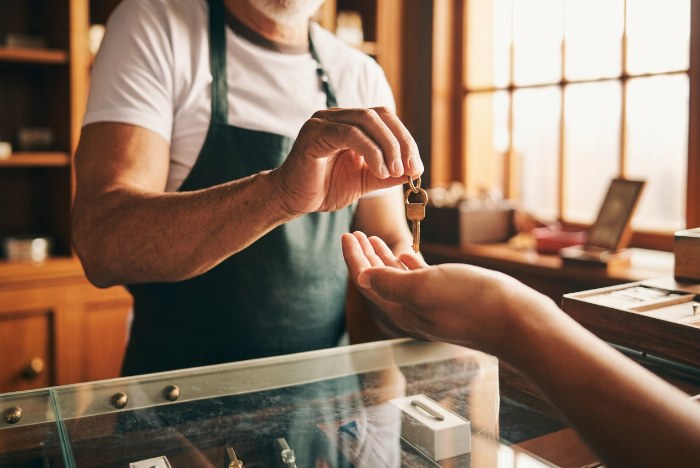
Canada’s jewellery map is consolidating around the stores that planned for their own future. The 507 that vanished mostly did not fail. They simply had no one to hand the keys to.
Frequently asked questions
How many jewellery stores have closed in Canada since 2015?
Statistics Canada business counts show a net loss of 507 employer jewellery stores between December 2015 and December 2025, from 3,049 to 2,542, a 16.6 per cent decline. Net means new stores opened minus stores closed, so gross closures run higher.
How many jewellery stores has Quebec lost?
Quebec fell from 710 employer jewellery stores in 2015 to 563 in 2025, a net loss of 147 stores or 20.7 per cent, the steepest decline of any large province.
How many jewellery stores close in Canada each year?
No agency publishes exact figures. However, applying Statistics Canada retail exit rates of 7.5 to 9.4 per cent, an estimated 200 to 300 Canadian jewellery stores close permanently each year, including 40 to 55 in Quebec, offset by new openings. Over the full decade, modelled gross closures most likely total 1,500 to 2,500 nationally.
Are new jewellery store openings in Canada independent stores?
Many are not. Documented openings since 2023 skew to chain extensions, including Lovisa, Hillberg & Berk, Mejuri, Pandora, and mono-brand watch boutiques built by existing retail groups. Because Statistics Canada no longer separates chains from independents, the exact share is unmeasurable.
Why are Quebec jewellery stores closing?
Press-documented closures are dominated by retirement without succession rather than bankruptcy. Contributing pressures include record gold prices, declining mall traffic, rent increases, and the loss of gemology and watchmaking training programs in Quebec.
Which Canadian province has the fewest jewellery store closures?
British Columbia had the smallest 10-year net decline among large provinces at 4.6 per cent. Meanwhile, over the past two years, Manitoba is the only province growing its jewellery store count, up from 61 to 67 stores.
Sources: Statistics Canada Canadian Business Counts (Tables 33-10-0039, 33-10-1095 and intervening releases); Statistics Canada business openings and closures, Table 33-10-0270; Office of the Superintendent of Bankruptcy insolvency statistics, Q1 2026; La Voix de l’Est; Le Nouvelliste; Le Devoir; Radio-Canada; L’Express de Drummondville; Journal Métro; Néomédia; Noovo Info; Global News; North Shore News; insauga; Retail Insider; Cadillac Fairview; Pandora Group.

Author: Olivier Fel.
Olivier Felicio is the founder and publisher of Canadian Jeweller Magazine, Canada's jewellery business publication since 1879. He writes on retail strategy, market data, trade policy and the commercial side of the Canadian jewellery and watch trade, and hosts Time and Shine, Canada's jewellery buying event. Contact: olivier@canadianjeweller.com.


