







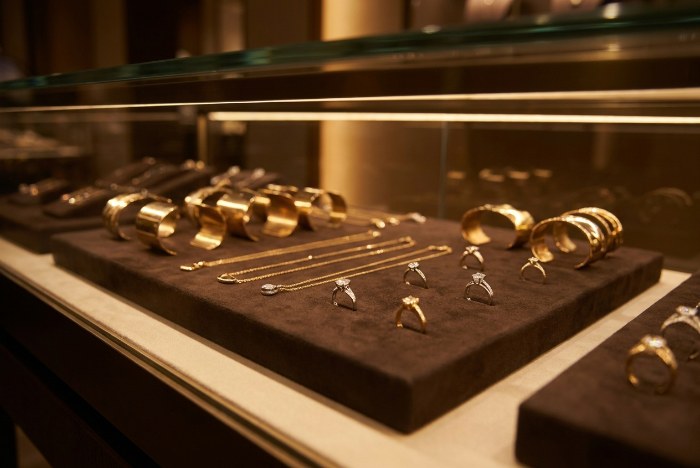
Richemont jewellery sales reached €4.73 billion in three months and grew 24 per cent. The group’s watch division managed 8. That gap is the single number Canadian retailers should copy into their planning file. The Geneva group behind Cartier and Van Cleef & Arpels reported total sales of €6.3 billion for the quarter ended 30 June 2026. That was up 20 per cent at constant exchange rates. Analysts had modelled roughly 11 per cent. The beat was wide enough that Vontobel called the result “stratospheric.”
The temptation is to read this as proof that luxury has recovered. That reading is too broad. Underneath the group total sit two very different demand curves, and the one that matters for a Canadian counter is the fine jewellery curve.
How fast did Richemont jewellery sales grow in the first quarter?
Fine jewellery carried the quarter almost single-handedly. The Jewellery Maisons — Cartier, Van Cleef & Arpels, Buccellati and Vhernier — posted €4,732 million in sales, a 24 per cent organic rise. That is the seventh consecutive quarter of double-digit growth for the division. Watches added €873 million, up 8 per cent. The fashion and accessories arm, which houses Chloé, Alaïa and Montblanc, grew 9 per cent to €724 million.
So jewellery grew three times faster than watches inside the same company, sold through the same boutiques, to broadly the same clients. The product mix did the heavy lifting, not the macro backdrop.
| Division | Q1 sales (€m) | Organic growth |
|---|---|---|
| Jewellery Maisons | 4,732 | +24% |
| Specialist Watchmakers | 873 | +8% |
| Other (fashion & accessories) | 724 | +9% |
| Group total | 6,300 | +20% |
Source: Richemont Q1 FY2027 trading update, quarter ended 30 June 2026.
Why did jewellery pull so far ahead of watches?
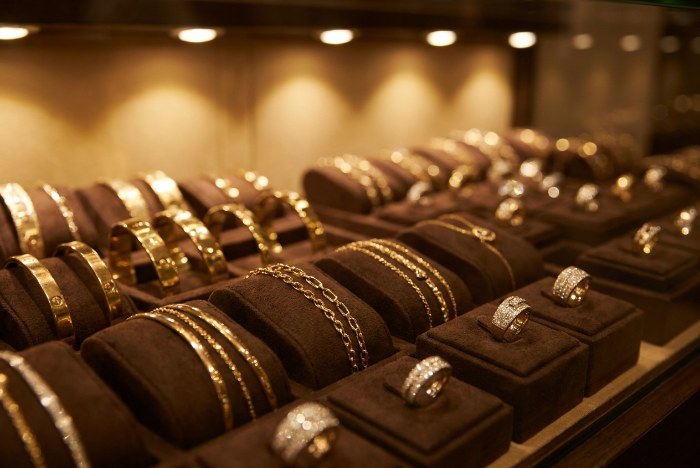
Branded fine jewellery has become the category clients trust to hold value. Gold sat near record levels through the spring, and a Cartier Love bracelet or a Van Cleef Alhambra motif reads as a store of worth as much as an ornament. Watches, by contrast, lean harder on discretionary timing and on a secondary market that cooled after 2023. The buyer who hesitates on a fourth watch will still add to a jewellery collection.
The channel figures sharpen the point. Richemont’s own retail boutiques grew 24 per cent to €4,504 million. Wholesale — the stock the group sells through third-party doors — grew 9 per cent to €1,452 million. Online retail rose 18 per cent. Value is concentrating inside brand-controlled distribution, and inside the highest-margin category those brands sell.
Which regions drove the growth, and where does Canada fit?
Every region except the Middle East and Africa grew by more than 10 per cent. Japan led at 36 per cent, flattered by a weak yen that turned the country into a tourist-shopping magnet. The Americas followed at 27 per cent, worth €1,670 million and now Richemont’s second-largest region after Asia Pacific. Canada sits inside that Americas figure.
| Region | Q1 sales (€m) | Organic growth |
|---|---|---|
| Asia Pacific | 2,068 | +21% |
| Americas | 1,670 | +27% |
| Europe | 1,429 | +11% |
| Japan | 632 | +36% |
| Middle East & Africa | 530 | +3% |
Source: Richemont Q1 FY2027 trading update.
Canada-specific numbers are not broken out by Richemont, and that gap is worth naming plainly rather than papering over. What the domestic market does show is steady appetite. Grand View Research values the Canadian jewellery market at roughly US$4.6 billion in 2026, growing at about 6 per cent a year through 2033. The maisons have voted with their capital. Van Cleef & Arpels opened its first Canadian flagship on Bloor Street in Toronto in late 2023. Cartier now runs boutiques from Vancouver to Montreal. Citigroup analysts also noted that Mainland China slipped by a low single-digit percentage in the quarter. The growth is coming from local clients in North America and Japan, not from Chinese travel.
What does the retail-versus-wholesale split mean for independents?
An independent jeweller cannot buy Cartier’s marketing budget. It can borrow the mechanics that produced these numbers. Three of them travel well to a Canadian sales floor.
Clienteling first. Richemont’s retail outperformance rests on knowing the client by name and following up between visits. A store doing $2 million a year that lifts repeat purchase rate by even five points recovers more margin than a season of new-customer discounting. Second, position branded and signed fine jewellery as the value anchor of the case, not as an add-on to bridal. The gold narrative is doing the persuading; the counter simply has to be stocked to meet it. Third, treat watches as a service and relationship category this year rather than a volume engine. The Richemont split says watch demand is real but slower, and inventory planned on last year’s ratios will tie up cash.
What should Canadian jewellers do on Monday?
Pull the sell-through report and separate branded fine jewellery from fashion and bridal. If the branded line is understocked relative to demand, that is the reorder priority. Review the client book for anyone who bought gold in the past year and has not been contacted since; those are the highest-probability second sales. Check watch inventory against a realistic 8-to-10 per cent growth assumption, not a jewellery-led one. And read the room on gold: clients are buying it as much for security as for style, which changes the sales conversation from fashion to worth.
Richemont’s quarter is not a signal that every luxury tide is rising. It is a signal that branded, gold-backed fine jewellery is where the demand and the margin now sit. That is a category a Canadian independent can compete in, on service if not on scale. For the wider context on why the metal is likely to stay expensive, see our analysis on why 2026 could keep gold prices elevated.
Frequently asked questions
How much did Richemont sales grow in the first quarter of fiscal 2027?
Group sales reached €6.3 billion for the quarter ended 30 June 2026, up 20 per cent at constant exchange rates and 17 per cent at actual rates, beating analyst forecasts of about 11 per cent.
How fast did Richemont jewellery sales grow?
The Jewellery Maisons division — Cartier, Van Cleef & Arpels, Buccellati and Vhernier — grew 24 per cent organically to €4,732 million, its seventh straight quarter of double-digit growth.
Did Richemont’s watch business grow as fast as jewellery?
No. Specialist Watchmakers grew 8 per cent to €873 million, roughly a third of the jewellery division’s pace, underlining that the quarter was jewellery-led.
Which regions grew fastest for Richemont?
Japan led at 36 per cent and the Americas rose 27 per cent to €1,670 million. Every region except the Middle East and Africa grew by more than 10 per cent.
What does the result mean for Canadian jewellers?
Canada is not broken out, but the read-across is clear: branded, gold-backed fine jewellery is driving demand and margin, and clienteling plus disciplined watch inventory are the practical levers independents can copy.
Sources: Richemont Q1 FY2027 trading update; GlobeNewswire; Grand View Research, Canada jewellery market.

Author: Canadian Jeweller Editorial Team
The editorial team of Canadian Jeweller Magazine, Canada’s jewellery industry publication since 1879. We report on retail strategy, diamonds and gemstones, watches, precious metals, technology, and the business of jewellery across Canada. Editorial inquiries: editor@canadianjeweller.com.


