







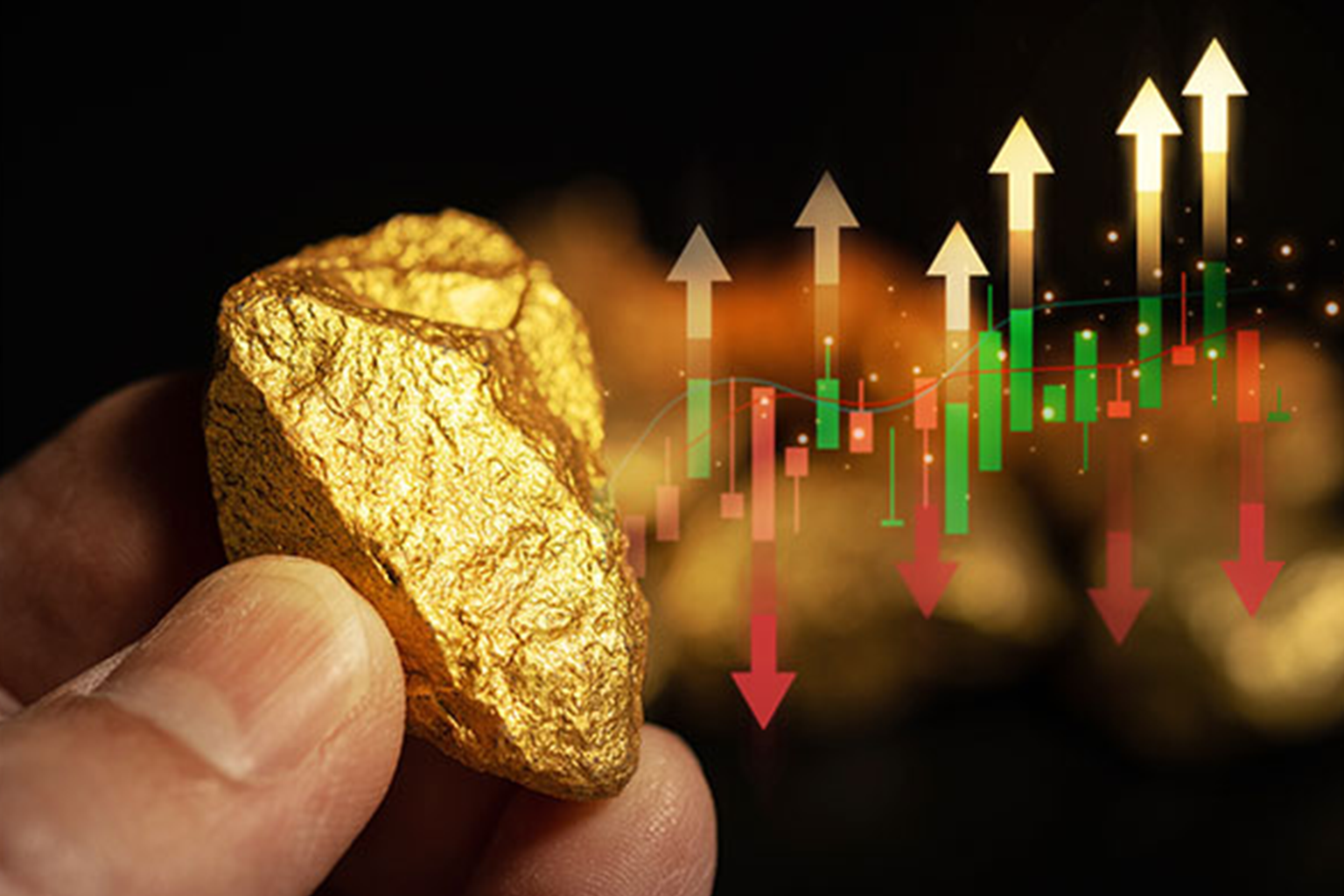
For most of the last century a jeweller could keep one eye on the price of oil and feel reasonably informed about gold. The two moved together often enough to earn their own shorthand on trading desks: the gold-to-oil ratio, the number of barrels an ounce of gold could buy. Rising energy meant rising inflation, and gold, the classic inflation hedge, rose with it. The ratio spent most of the years between 1970 and 2019 inside a familiar band near fifteen to twenty barrels to the ounce.
That band has shattered, and the textbook response to it is now a trap. In early 2026 the ratio stretched past 75 barrels — gold near US$5,000 while crude sat around US$67 — before a Middle East war sent oil surging and compressed it back toward 52. The mechanical reading says an extreme ratio mean-reverts, so a patient buyer waits. But mean reversion assumes the two assets are still doing the same jobs for the same people. They are not. Oil is now genuinely expensive, trading between US$90 and US$100 after climbing more than 45 per cent since late February, and gold has refused to follow it up — pulling back from its January record of US$5,589 to roughly US$4,500 by early June on logic of its own. The ratio will not revert, because gold’s buyers have changed permanently. Anyone running a jewellery business on the old correlation is using a map of a country that no longer exists.
The number that matters is the mix, not the price
The headline figure jewellers fixate on is the price per ounce. The figure that should worry them is who is now buying it.
Gold demand has quietly flipped. In the first quarter of 2026, global jewellery demand fell 23 per cent year over year to 300 tonnes, with declines across every major market — China down 32 per cent, India down 19, the Middle East down 23. Over the same quarter, bar-and-coin investment demand jumped 42 per cent to 474 tonnes, central banks added another 244, and gold ETFs took in 62 tonnes more. Total demand reached a record US$193 billion in value, and investment now far exceeds fabrication.
Read that again as a jeweller, not an economist. For most of modern history, jewellery was the single largest use of gold on earth — the demand that set the tone for the metal. It has been demoted to a residual. The ounce in your showcase is now priced by a monetary market in which jewellers do not participate and cannot influence, dominated by sovereign reserve managers in Warsaw, Beijing and New Delhi who are buying gold to escape currency and sanctions risk. They will not slow down because a bride in Brampton balks at a price tag. You have become a pure price-taker on the most important input in your business, and the people setting that price have no interest in adornment at all.
The metal is now pass-through. Your margin lives only in the work.
This is why the instinct to fight high gold by shrinking it — thinner shanks, hollow builds, a quiet slide from 18k to 14k to 10k — is the wrong move, and not merely for taste reasons. When the gram is a monetary instrument, the metal portion of every ticket is pure cost pass-through with no defensible margin in it. A customer can price the gold content against a Maple Leaf in thirty seconds and will. The only part of any piece a competitor cannot quote against spot is what the metal has been turned into: the design, the craftsmanship, the hand of the bench, the service and the story around the sale. That is where one hundred per cent of defensible margin now lives.
Cutting karat to hide the price does the opposite of protecting margin. It trains the customer to shop the gram — the one contest a jeweller can never win against a bullion dealer. The durable position is the reverse: let the metal be honest pass-through and move the entire margin conversation onto the merit of the work, where a spot quote has nothing to say.
The same force that emptied the case can refill it
Here is the turn most coverage misses. The flight to safety hollowing out traditional jewellery demand is simultaneously creating a different buyer — and that buyer walks in wanting gold on their body, not in a vault.
Roughly a third of the renewed interest in gold-heavy jewellery now traces to safe-haven behaviour, and wearable wealth has become a real category rather than a marketing line. The advantage a jeweller holds over the Royal Canadian Mint is precisely the duality the monetary buyer cannot get from a coin: a high-purity piece carries both material value and craftsmanship, wealth you can wear and an object made by someone worth paying for. The two arguments that seemed to be at war — sell the metal versus sell the work — finally point in the same direction. Stop apologising for the price. Reposition the high-gold piece as portable store of value, executed with a level of design no bar or coin will ever carry, and the macro becomes a sales asset instead of an objection.
Canada sits on both sides of this trade
No country is better placed to tell that story. Canada is among the world’s four or five largest gold producers, mining roughly 200 tonnes a year with Ontario and Quebec accounting for nearly seven of every ten ounces, and it is home to the Gold Maple Leaf, one of the planet’s benchmark bullion coins. Canadian jewellers stand unusually close to both the supply that comes out of the ground and the monetary demand engine that now sets the price.
And Canadian buyers are bucking the global retreat. While world jewellery demand fell 23 per cent, Canadian jewellery and watch sales rose 10.5 per cent year over year in the first quarter of 2026, against a domestic jewellery-store sector worth about CA$3.6 billion. That figure is a value measure and includes watches, and granular Canadian gold-jewellery tonnage is not published the way it is for India and China — the Canadian Jewellers Association’s National Retail Report remains the closest domestic benchmark. But the direction is telling: Canadians are leaning into the dual motive of wealth and luxury rather than away from gold. They are the exact customer the wearable-wealth pitch was built for, and they are already in the market.
The risk nobody on the floor is pricing
There is a cost to the new regime that rarely gets said out loud. Every ounce in your inventory is now bought at a price that contains a monetary premium set by central banks. If that buying pauses — a reserve-manager rotation, a sanctions thaw, a sharply stronger loonie — the premium can unwind faster than jewellery demand recovers, and slow-moving gold inventory turns into a markdown you never chose to take.
The defensive posture follows directly: lean inventory, faster turns, more memo and consignment, and a price structure where labour and design carry the margin while metal stays honest pass-through. You cannot hedge a bridal case, but you can stop quietly financing a monetary position you never meant to hold.
The decision in front of you
The question is no longer when gold comes back down. It is whether you keep running a metal-weight business in a market where the metal is priced by governments. The ratio will not rescue you; mean reversion assumes a world that has ended. The jewellers who win the rest of 2026 will treat CA$6,000 gold as the permanent baseline, move every dollar of defensible margin onto craft and design, manage inventory as if the premium it contains is borrowed, and sell the macro back to the customer as wearable wealth.
Oil will keep the headlines. Gold has left that conversation entirely — and it is not coming back to it.
Canadian Jeweller has tracked the business of the trade since 1879. For analysis that helps you decide, not just read, subscribe for more.
FAQ
What is happening with gold and oil prices in 2026? Oil is elevated, trading between US$90 and US$100 after rising more than 45 per cent since late February 2026 on Middle East conflict. Gold has stopped tracking it, pulling back from a January record of US$5,589 an ounce to roughly US$4,500 (about CA$6,000) by early June and moving on its own monetary drivers rather than energy-led inflation.
Why does it matter to jewellers? Gold demand has flipped. In Q1 2026 jewellery demand fell 23 per cent to 300 tonnes while bar-and-coin investment rose 42 per cent to 474 tonnes and central banks added 244 tonnes. Jewellery is no longer the dominant source of gold demand, which means jewellers have lost influence over the price of their own primary raw material and must plan as price-takers.
Why is gold no longer following oil? For a century, oil signalled inflation and gold rose with it. Today gold is driven by central bank accumulation and de-dollarization tied to sanctions and currency risk, not consumer inflation, so the old gold-to-oil ratio no longer mean-reverts the way the textbook assumes.
What opportunities exist? Anchor margin to craftsmanship, design and added value rather than metal weight, and reposition high-purity gold jewellery as wearable wealth for the safe-haven buyer — a dual return of material value plus craftsmanship that bullion coins cannot offer. Canadian jewellery and watch sales rose 10.5 per cent year over year in Q1 2026.
What risks exist? Inventory carries a monetary premium set by central banks; if that buying pauses, slow-moving gold stock can become a markdown. Margin compression and customer sticker shock add to the pressure, as does the strategic error of waiting for a correction the demand picture makes unlikely.
What should jewellers do next? Treat elevated gold as the operating baseline. Let metal be honest pass-through and price on the merit of the work, run leaner inventory with more memo and consignment, build a transparent scrap and trade-in programme, and train staff to sell both artistry and gold as a store of value.


