







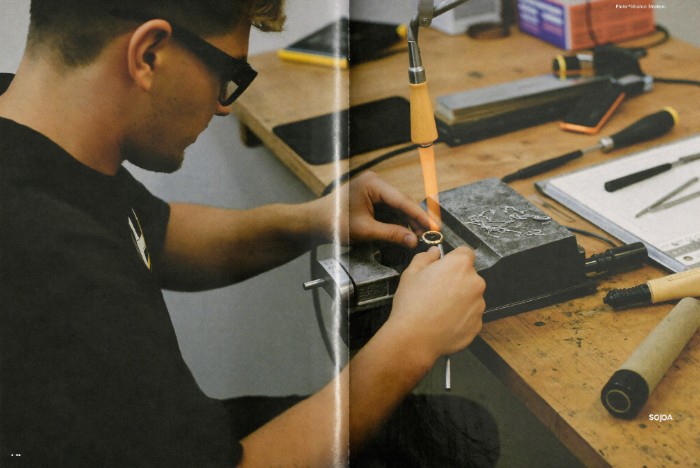
Somewhere in Canada this month, another bench went quiet. The goldsmith who sat at it for forty years set his last stone, hung up his apron, and retired. The store posted the job. The applications did not come, because the applicant does not exist. He was never trained — and as of last September, he has fewer places to be trained than at any point in living memory.
The goldsmith shortage in Canada just got worse by decision, not by accident. George Brown, the largest jewellery school in North America, suspended three of its four jewellery and gemmology programs as of September 2025. The pipeline that was already too small lost most of its Toronto tap.
What happened at George Brown?
The college suspended the three-year Jewellery Arts advanced diploma, the two-year Jewellery Methods diploma, and the Gemmology program — the credentials that actually produce bench-ready repair, setting, and custom talent. Students marched. Faculty and the trade staged a symbolic funeral for the programs. The reason was money, specifically the financial squeeze that followed Ottawa’s international student policy changes, and it had nothing to do with demand. The proof sits in the one program that survived: the one-year Jewellery Essentials certificate drew 80 enrolments for 2025-26, against the 15 to 20 applicants of a normal year. Students who came for six terms of training are now competing for two. Those already enrolled have until April 2027 to finish.
What does the trade actually lose?
Count the casualties beyond the classroom. Custom and repair are the highest-margin counters in Canadian retail jewellery, and both run on bench skill. Less bench skill means longer repair queues, more work sent out of province or out of country, and margin that leaves with it. The gemmology suspension cuts deeper than most owners realize, because gemmology credentials feed the appraisal profession. Fewer trained gemmologists eventually means fewer qualified appraisers — and every insurance claim, estate file, and divorce settlement in the country depends on them. Meanwhile, the students who would have anchored Toronto’s workshops for the next forty years are competing for two terms of training instead of six. The industry called the decision “a huge loss” and delivered letters to the college saying so. They were not exaggerating. Scarcity this deliberate compounds: wages inflate, small trade shops cannot compete for talent, and the capacity gap widens every retirement season.
How small is the pipeline now?
Count it on one hand. Toronto keeps the one-year Essentials certificate and continuing-education courses. Vancouver Community College anchors the West with its Jewellery Art and Design program, full-time and part-time. Quebec’s école de joaillerie network carries the francophone tradition. Around them sit private studios and night courses, which mostly produce hobbyists rather than production-speed bench staff. Every graduating class was already spoken for by summer — and that was before Toronto’s deep programs went dark.
Who switched off the tap?
The trade did its part over thirty years, one sensible decision at a time. Stores stopped taking apprentices because CAD and outsourced casting made send-out cheaper. The apprenticeship culture that once turned polishers into goldsmiths went with it. Then the colleges, starved of the enrolment revenue that had quietly subsidized expensive craft programs, began cutting. Today’s premium wages for scarce benchwork are the invoice for those thirty years, and George Brown’s suspension added a surcharge. That is not an accusation against any one owner or one college. It is a mechanism — and mechanisms can run in reverse.
What do the wage signals say?
The honest answer: Canada has no reliable wage survey that isolates bench jewellers, and we will not pretend otherwise. The market signals speak instead. Recruiters now work the trade-show aisles. Setters command signing premiums. More than one retailer has bought a small workshop mainly to acquire the people inside it. Skilled trades behave this way when scarcity bites, and scarcity resolves toward whoever trains, poaches, or retains best. Poaching is the expensive option.
What can a store do right now?
Three moves work this year. First, hire from the closing window: students already enrolled at George Brown may finish their programs until April 2027, which means the last deep-trained Toronto cohorts are graduating now. A store that recruits from these final classes is buying a scarce asset at the moment of maximum supply. Second, grow your own. Put a motivated polisher or sales associate through the surviving Essentials certificate, VCC’s part-time path, or Quebec’s écoles, then finish them at your bench the way the trade always used to. Tuition runs a few thousand dollars a year — a fraction of one recruiter’s fee — and the store captures repair margin from year one. Third, stay in the repair business regardless, through a managed send-out counter, the same structure that works for watch service. Own the customer while the bench grows.
What has to happen long term?
The short-term moves keep a store staffed. Only collective action rebuilds the pipeline. George Brown has invited the industry to a roundtable on “viable pathways” for its jewellery and gemmology training — that door is open, and the trade should walk through it with money, not just letters. Eighty enrolments against twenty applicants proves demand; what died was funding, and funding is a solvable problem. Suppliers and associations can sponsor seats, endow benches, and underwrite equipment the way other trades’ industries underwrite theirs. The #SaveGBCJewellery campaign showed the community will mobilize; the next step is a standing industry scholarship fund with a name on it. Beyond one college, the trade needs a recognized national apprenticeship pathway for bench jewellery, so training no longer lives or dies on a single institution’s budget line. The floor of the Time & Shine Jewellery Trade Show is where those commitments belong — the shortage is national, the marketplace is too, and an industry that funds its own training stops renting its future from anyone’s spreadsheet.
Frequently asked questions
Did George Brown cancel its jewellery programs?
It suspended three of four as of September 2025 — Jewellery Arts, Jewellery Methods, and Gemmology. The one-year Jewellery Essentials certificate continues, and enrolled students may finish by April 2027.
Is there a goldsmith shortage in Canada?
Yes, and it deepened when Toronto’s largest programs went dark. The remaining schools graduate far fewer bench-ready jewellers than retirements remove.
Where can you still train as a goldsmith in Canada?
George Brown’s one-year Essentials certificate and continuing education, Vancouver Community College’s Jewellery Art and Design program, and Quebec’s école de joaillerie network.
What do goldsmiths earn in Canada?
No reliable survey isolates bench jewellers. However, signing premiums, trade-show recruiting, and workshop acquisitions all point to compensation rising the way scarce trades always do.
How can a store hire a goldsmith?
Grow one. Sponsor an existing employee through the remaining certificate and part-time programs, finish them at your bench, and keep the repair margin during the build.
Sources: CBC News on the George Brown suspensions; CP24 on the student rallies; The Eyeopener on the industry response; the Save GBC Jewellery campaign; Vancouver Community College Jewellery Art and Design.
Related: Jewellery Apprenticeship in Canada: One Province Pays $17,000, Nine Pay Nothing, a full breakdown of what training a goldsmith costs and which public money a store can actually claim.

Author: Canadian Jeweller Editorial Team
The editorial team of Canadian Jeweller Magazine, Canada’s jewellery industry publication since 1879. We report on retail strategy, diamonds and gemstones, watches, precious metals, technology, and the business of jewellery across Canada. Editorial inquiries: editor@canadianjeweller.com.


