







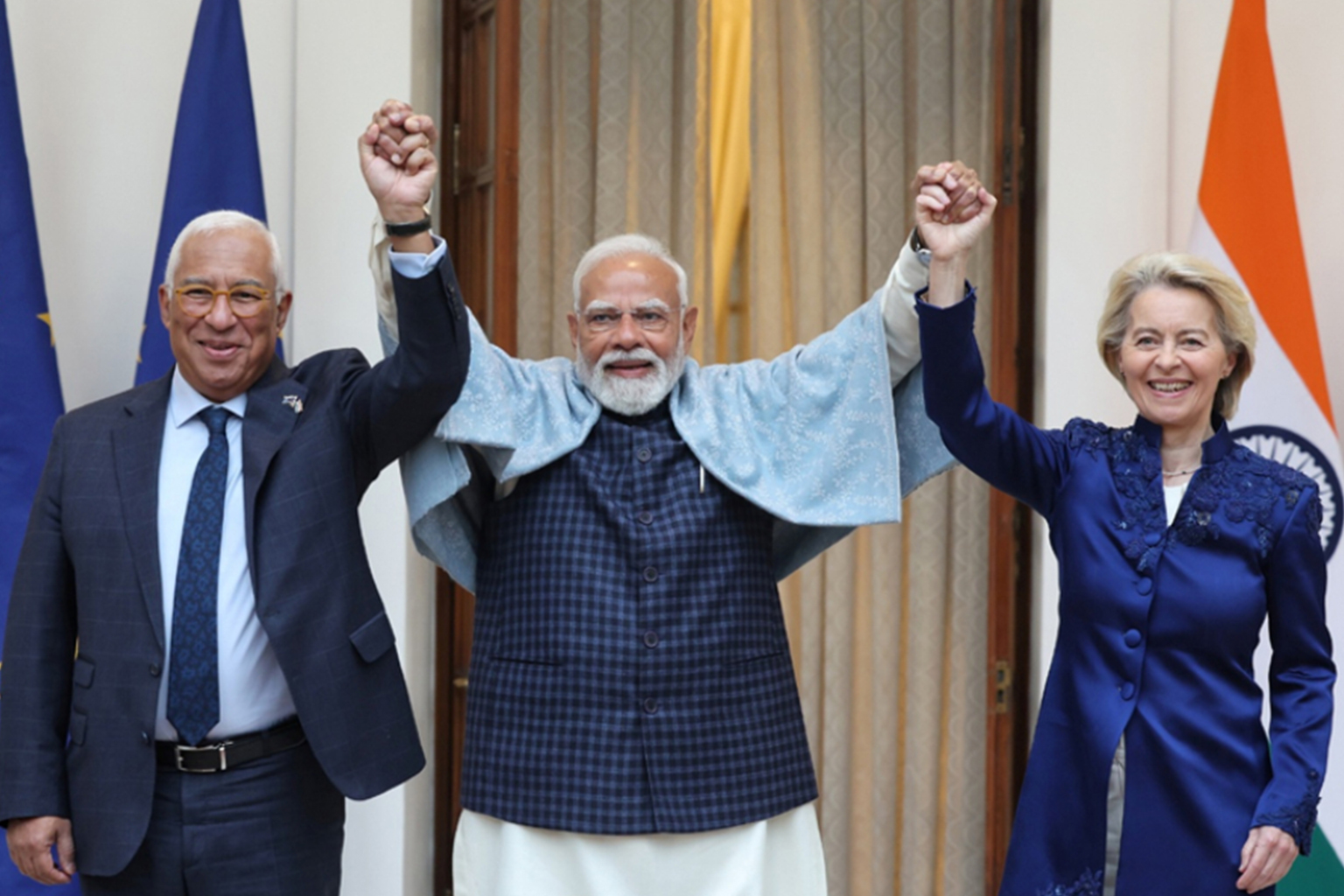
The Gem & Jewellery Export Promotion Council (GJEPC) welcomed the removal of import duties on Indian gem and jewellery products under the India–EU Free Trade Agreement (FTA). The change eliminates duties of roughly 2% to 4% on precious jewellery, a move the Council says could unlock significant export growth across the 27-member European Union—one of the world’s most premium jewellery consumer markets.
India’s gem and jewellery exports totalled approximately US$30 billion in calendar year 2024, according to GJEPC. Bilateral gem and jewellery trade with the EU reached about US$5.2 billion, with exports of roughly US$2.7 billion and imports of around US$2.5 billion. EU jewellery imports from India were described as comparatively limited at about US$628 million, led by precious jewellery (about US$573 million) and fashion (imitation) jewellery (about US$55 million), categories GJEPC said were previously subject to the 2% to 4% duty range now being removed under the agreement.
GJEPC Chairman Kirit Bhansali credited India’s leadership for securing what he called a landmark trade pact, and positioned the India–EU FTA as a major diversification lever for India’s gem and jewellery sector. In GJEPC’s view, the agreement could help lift bilateral trade in the category to US$10 billion (approximately ₹91,000 crore) within three years, as Indian manufacturing and design hubs scale shipments of precious jewellery (plain and studded), silver jewellery, and imitation jewellery into Europe.
GJEPC also argued that, in a period defined by high metal prices and shifting trade dynamics, zero-duty access should support improved margins and competitiveness for Indian manufacturers, while encouraging faster production and job creation. The Council added that the agreement may help offset pressure in other export corridors and expand European runway for Indian jewellery brands seeking a broader retail footprint.
How this compares with Canada (what the numbers and agreements imply)
1) Canada already has an EU trade deal that removes most tariffs
Canada and the EU have the Comprehensive Economic and Trade Agreement (CETA). The EU describes CETA as eliminating duties on 99% of tariff lines (with most removed when the agreement provisionally entered into force).
Practical takeaway: Canadian-origin jewellery and related products can often enter the EU with reduced or zero customs duty if they meet CETA rules of origin and documentation requirements.
2) Canada’s tariff schedule shows why “zero duty” is a headline
Canada’s own customs tariff schedule lists MFN duty rates on many jewellery items in Chapter 71 (for example, several “other” jewellery lines show MFN rates such as 6.5% or 8.5%, depending on the specific HS subheading). The same schedule also shows preferential programs and partner tariffs that can reduce those rates.
Practical takeaway: When an FTA (or preferential tariff) removes even single-digit duties, it can be meaningful in categories like jewellery where price architecture, margin, and landed cost sensitivity are high.
3) Canada–India is not yet at the “zero-duty” stage
Canada and India have launched negotiations toward a Comprehensive Economic Partnership Agreement (CEPA), but Global Affairs Canada lists the agreement’s status as “In negotiations”, with consultations noted into early 2026.
Practical takeaway: Unlike Canada–EU (CETA), Canada–India tariff outcomes are still prospective. Any future duty relief for jewellery would depend on the final negotiated schedules, product coverage, and rules of origin.
4) Why the India–EU move matters from a Canadian competitive lens
If India gains duty-free access into the EU for jewellery categories where duties were previously applied, it narrows the tariff advantage that other preferential partners may already have in Europe. For Canadian brands selling into the EU, the differentiator becomes less about duty and more about design positioning, brand equity, compliance credibility, lead times, and wholesale terms—especially in premium segments.


