







Luca Mining Corp. spent the second quarter of 2026 doing what a disciplined producer does when metal prices turn: it kept investing in the assets. Luca Mining Q2 2026 production results, released on 20 July, pair steady output from the company’s two Mexican mines with a cash balance that fell to $24.7 million, a drawdown driven by deliberate spending and the mechanics of concentrate pricing rather than any weakness in the operations. For the Canadian jewellery trade, the filing offers an uncommon view of how a sustained decline in gold and silver reprices the metal well before it reaches a showcase.
Luca is a Vancouver company listed on the TSX Venture Exchange, operating two wholly owned underground mines in Mexico’s Sierra Madre belt. Campo Morado in Guerrero State produces a polymetallic concentrate rich in zinc, copper and silver. Tahuehueto in Durango State yields primarily gold and silver. Together they give the quarter a Canadian vantage point on four metals, and on the capital discipline required to fund growth through a falling market.
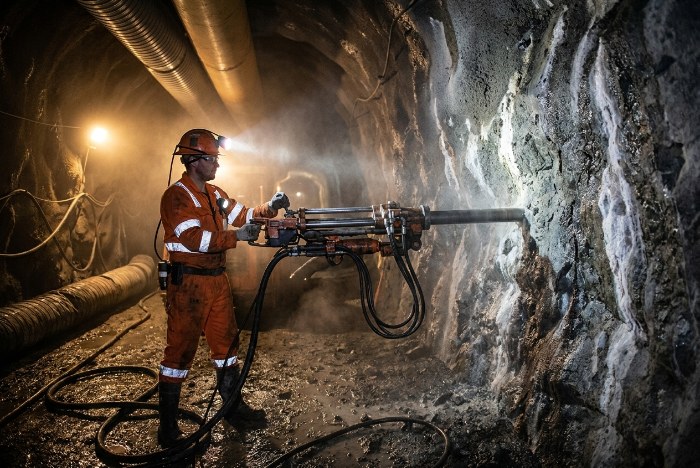
What did Luca Mining report for Q2 2026?
Production held firm across both operations. On a consolidated basis, Luca produced 6,161 ounces of gold and 334,237 ounces of silver, alongside 2,660 thousand pounds of copper, 8,879 thousand pounds of zinc and 1,942 thousand pounds of lead. Payable metal, the volume for which Luca is ultimately compensated once treatment and refining charges are applied, ran below produced metal, as it does at every concentrate operation.
| Produced metal, Q2 2026 | Campo Morado | Tahuehueto | Consolidated |
|---|---|---|---|
| Gold (oz) | 1,700 | 4,461 | 6,161 |
| Silver (oz) | 234,896 | 99,340 | 334,237 |
| Copper (k lbs) | 2,227 | 434 | 2,660 |
| Zinc (k lbs) | 7,272 | 1,607 | 8,879 |
| Lead (k lbs) | 964 | 979 | 1,942 |
Tahuehueto did the heavier lifting on gold, contributing 4,461 of the 6,161 produced ounces. Management credited the gain to investment in the processing plant and the transition to a new mining contractor, La Cantera. Campo Morado accounted for the majority of the silver and for nearly all of the copper and zinc.
Why did the cash balance fall to $24.7 million?
Cash closed the quarter at roughly $24.7 million, down from $36.4 million at the end of March. Viewed in isolation, an $11.7 million reduction invites concern. The composition of that drawdown tells a more reassuring story.
The larger part reflects capital the company committed by choice. Underground development continued at both mines. Exploration advanced at a record pace. Luca also settled lump sum tax obligations during the period and repurchased shares under its normal course issuer bid. Debt, in parallel, was reduced to approximately $1.4 million, with full repayment expected in July.
The quarter therefore documents how the cash was deployed rather than lost. It moved into development, into the share count and into tax.
What is provisional pricing, and why does it matter to the trade?
One line in the results warrants particular attention, because it explains how a price move works its way through a producer’s revenue. When a miner ships concentrate, the sale is booked initially at a provisional price tied to prevailing metal markets. Final settlement follows during a quotational period that typically runs one to four months after shipment, when the market prices over that window determine the amount actually owed.
Through the second quarter, both metals fell sharply. Gold retreated from its January record toward US$4,000 an ounce, touching a low near US$3,959 on 24 June. Silver declined further in percentage terms, easing from roughly US$75 at the start of April to below US$59 by the close of the quarter, a fall of more than 22 per cent.
| Q2 2026 price path (US$/oz) | Movement |
|---|---|
| Silver | about 75 in early April, 57.43 low on 24 June, 58.59 at the close, down more than 22 per cent |
| Gold | eased from its January record toward 4,000, near 3,959 low on 24 June |
Because concentrate shipped in earlier periods settled into this decline, the final prices came in below the provisional figures already recorded. The quarter consequently carried negative pricing adjustments on sales booked previously, a reminder that revenue at a concentrate producer stays provisional until the quotational period closes.
The parallel for the trade is instructive. A movement in the spot price does not settle instantly at any point along the chain. A producer recognises the adjustment months later at final settlement, while a retailer meets the same shift as an altered replacement cost on the next order. Both answer to one underlying price.
Why is Campo Morado building a stockpile?
Campo Morado operated to a deliberate plan during the quarter, mining more tonnes than it processed and allowing the balance to accumulate as surface stockpile.
The rationale is operational flexibility. A stockpile lets the mill be selective about its feed while the company pursues gains in metallurgical recovery, the share of contained metal the plant successfully extracts. Higher recoveries turn the same ore into more payable metal. The stockpile also serves as a bridge to the planned Campo Morado Expansion, which is designed to lift recoveries further.
The immediate effect is evident in the figures. Milled tonnes declined, so metal production and cash generation trailed the level of mining activity for the quarter. That shortfall is a question of timing rather than lost value, with the additional ore held on surface pending an improved processing configuration.
What does a producer’s quarter mean for Canadian jewellers?
A quarterly mining filing seldom informs retail decisions. This one merits closer attention.
Consider the amplitude of the price movement. Gold traded across a range exceeding US$1,600 an ounce in the first half of the year, and silver surrendered nearly a quarter of its value inside a single quarter. Inventory valued against one spot figure from a prior season carries genuine exposure when metal moves with that force.
The company’s conduct through the decline is equally telling. A domestic producer that reduces debt to nominal levels, drills a record 12,400 metres and repurchases stock in a falling market signals confidence in the future value of what it mines. Multiplied across the sector, that confidence underpins the supply of gold and silver on which every showcase ultimately depends.
The operational lesson is straightforward. Reconcile gold and silver inventory against current spot rather than landed cost, allow for the interval between a price move and its arrival on the next order, and treat volatility as a structural feature of precious metals rather than a passing event. The producer at the head of the supply chain already runs its business on precisely those terms.
For the broader price outlook informing these results, see Gold’s next act: why 2026 could keep prices elevated.
Frequently asked questions
What were Luca Mining’s Q2 2026 production results?
For the three months ended 30 June 2026, Luca produced 6,161 ounces of gold and 334,237 ounces of silver on a consolidated basis, along with 2,660 thousand pounds of copper, 8,879 thousand pounds of zinc and 1,942 thousand pounds of lead across its Campo Morado and Tahuehueto mines.
Why did Luca Mining’s cash balance drop in Q2 2026?
Cash fell from $36.4 million to about $24.7 million, mainly because of chosen spending on underground development and record exploration, lump sum tax payments, share repurchases under a normal course issuer bid, and downward provisional pricing adjustments as gold and silver declined.
What is a provisional pricing adjustment?
Concentrate sales are booked initially at provisional metal prices, then settled at final prices set during a quotational period one to four months after shipment. When prices fall in that window, sales recorded earlier are revised down.
Where are Luca Mining’s mines located?
Luca is a Canadian company listed on the TSX Venture Exchange, with two wholly owned underground mines in Mexico’s Sierra Madre belt: Campo Morado in Guerrero State and Tahuehueto in Durango State.
How do falling metal prices affect Canadian jewellers?
Lower gold and silver prices reduce replacement cost on new orders, yet the effect arrives on a delay, so retailers who revalue inventory against current spot and plan for that interval protect their margins in both directions.
Sources
- Luca Mining Corp., Q2 2026 production results (20 July 2026): lucamining.com/news
- Silver Price Trends: Q2 2026 Review and Forecast, Investing News Network: investingnews.com
- Gold Mid-Year Outlook 2026, World Gold Council: gold.org

Author: Canadian Jeweller Editorial Team
The editorial team of Canadian Jeweller Magazine, Canada’s jewellery industry publication since 1879. We report on retail strategy, diamonds and gemstones, watches, precious metals, technology, and the business of jewellery across Canada. Editorial inquiries: editor@canadianjeweller.com.


