







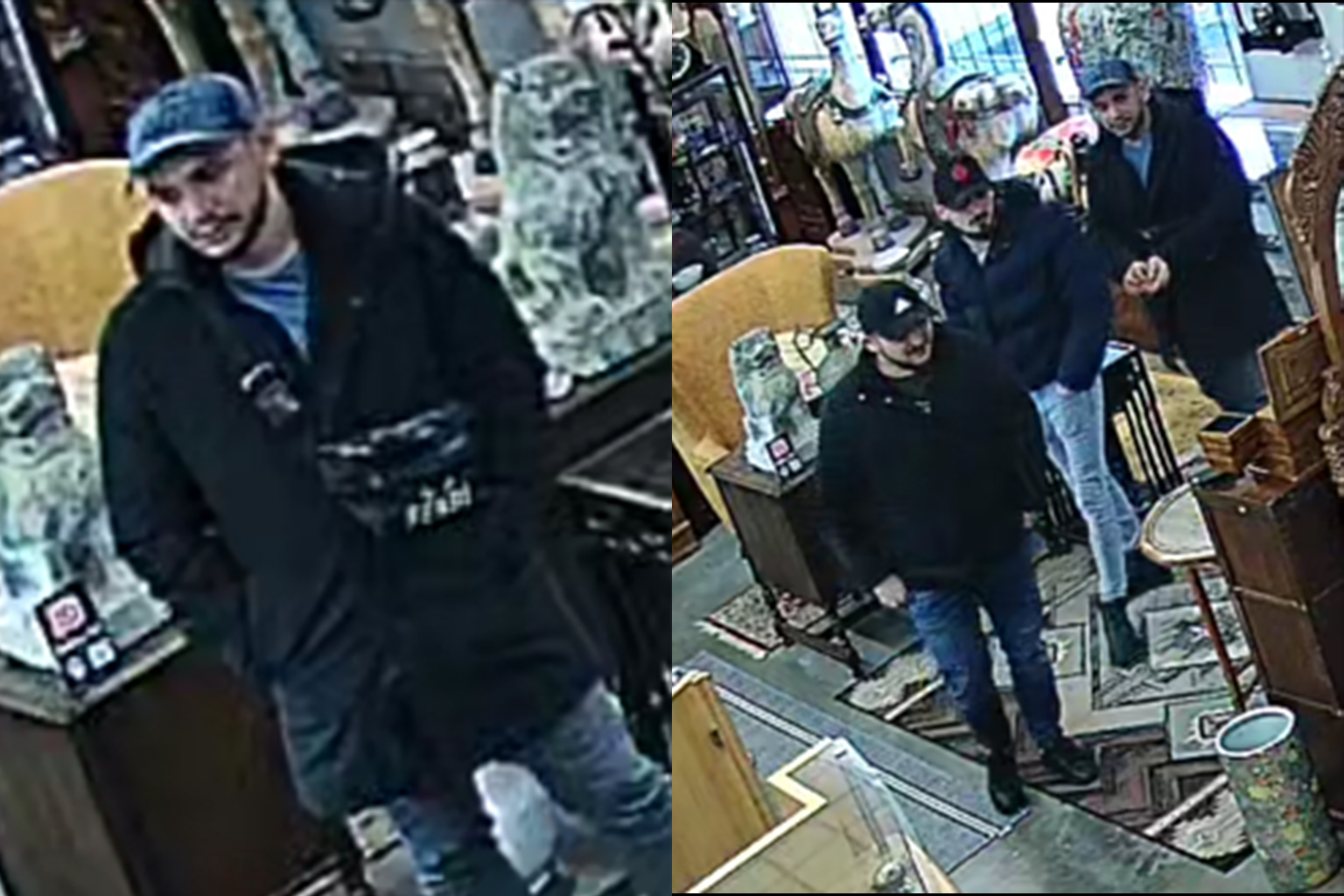
What began as a routine customer inquiry on Saturday, February 7, 2026, ended less than two days later in a loss that one Vancouver Island jeweller says wiped out money she and her husband had set aside for retirement.
According to the jeweller’s account, a man who identified himself as “Joseph” called requesting an afternoon appointment, saying he wanted to buy a gift for his wife. When he arrived, he was not alone for long. First came one “friend,” then a third man. The visit did not feel right. Sensing something was off, the jeweller called her husband in to oversee the interaction.
After the men left, she called 911 because she believed the visit had been suspicious.
Thirty-six hours later, while the couple slept upstairs, their 450-pound Class 4 safe was stolen. Inside, she says, were seven 7-ounce 24-karat gold wafers and $2,400 in cash, representing roughly $53,000 in retirement savings.
In retrospect, the jeweller believes the visit was not a shopping appointment at all, but a reconnaissance stop: a chance to assess the property, observe who was present, and understand how value was stored.
A visit that felt wrong
That detail matters.
In jewellery, crime does not always begin with forced entry. Sometimes it begins with a pretext. A phone call. A soft inquiry. A seemingly ordinary appointment. A “customer” who is less interested in buying than in studying entrances, exits, staffing patterns, routines, and where the real value may sit.
Canadian Jeweller reviewed correspondence related to the case between the victim and West Shore RCMP. In that correspondence, police later advised that investigators believed they had identified some of the men who attended the property days before the theft. According to the RCMP email, those individuals were believed to be Ontario residents suspected or accused in more than 15 separate thefts from businesses across Vancouver Island and British Columbia.
That does not mean the case was solved.
In fact, the most striking part of the correspondence is how clearly it shows the line between suspicion and proof.
Where the case hits the wall
In a February 22 email reviewed by Canadian Jeweller, West Shore RCMP told the victim there was “little to no likelihood” the file would be solved with the evidence then available. Police said they had no witnesses, no surveillance footage, no forensic evidence from the scene where the safe had been located, and no serial numbers for the stolen gold bars.
That last point is especially significant.
Ottawa Police states that when a serial number or other unique identifier is available, jewellery or other property can be entered on CPIC, the Canadian Police Information Centre, as stolen property, improving the chances of future identification if it resurfaces. CPIC also provides a public property search portal based on serial numbers.
Without that traceability, even recovered gold may be difficult to connect to a specific file. That is exactly the kind of evidentiary gap that can turn a strong suspicion into a closed file.
The bigger lesson for jewellers
This story is not only about one theft. It is about a recurring vulnerability inside the jewellery trade, especially where business and residence overlap, or where appointments are handled in smaller, more intimate settings.
Jewellers Vigilance Canada’s Crime Prevention Manual frames jewellery security as protection not only for inventory, but for family and employees as well, a reminder that in this industry the security perimeter often extends beyond the storefront.
Police guidance points in the same direction. RCMP safety materials urge the public to report suspicious activity, and B.C. RCMP business-security guidance stresses training staff to recognize suspicious or criminal behaviour, respond safely, and report it promptly. (RCMP)
That matters because the suspicious visit is often treated as an uncomfortable moment rather than as the possible opening stage of a crime. But in high-value categories like jewellery, an uneasy appointment may be intelligence in real time.
This case also lands against a wider Canadian backdrop in which theft crews do not necessarily stay local. In December 2025, Hamilton Police said Project Sommes uncovered an organized retail theft network trafficking stolen property across Ontario, Quebec, and British Columbia, underscoring the cross-jurisdiction mobility that now shapes many property-crime investigations. This B.C. jewellery file has not been publicly tied to that investigation, but the broader pattern is hard to ignore.
More than a theft
For the victim, this was not an inventory loss on paper. It was retirement money. It was security. It was peace of mind inside her own home.
And that may be the most important industry takeaway of all.
Too often, jewellery crime is discussed only in terms of stolen product, insurance claims, or dollar value. But cases like this expose something more personal: the emotional violence of being watched, assessed, and then hit after instinct told you something was wrong.
The hard truth is that once a theft occurs, investigators can only work with the evidence that exists. If there is no footage, no forensic trail, no identifiable markers, and no direct witness, even a highly suspicious pre-visit may never mature into a prosecutable case.
For jewellers, that shifts the conversation. Security cannot begin only at the moment of break-in. It has to begin earlier, at first contact. At appointment booking. At visitor screening. At the moment staff or owners feel that something is off.
Because in this category, the suspicious visit may not be the prelude to the story.
It may be the beginning of the crime.


