







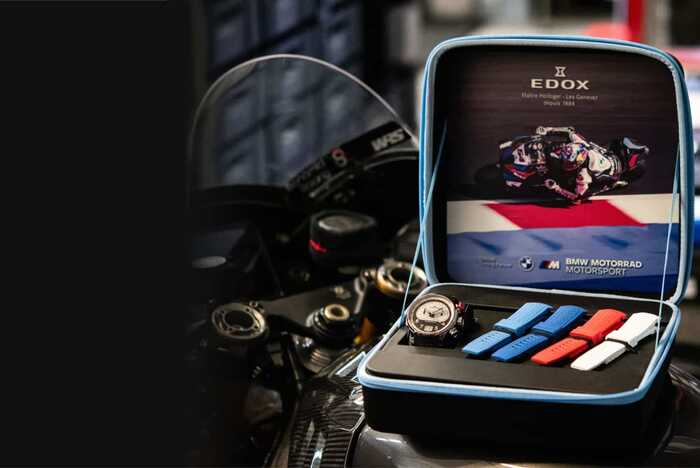
Edox watches come from a 142-year-old independent Swiss house, family-owned since 1983, known for COSC chronometer certification, motorsport and powerboat timekeeping, and dive watches rated to 1,000 metres. The brand is expanding its North American presence and exhibits at both 2026 editions of Time & Shine Expo: Edmonton (August 16-17) and Toronto (November 6-7).
Edox began in 1884. That year, a Biel watchmaker named Christian Rüefli-Flury finished a pocket watch. He had no intention of selling it. It was for Pauline, his wife. Her reaction convinced him he’d built something worth more than the watch itself. So he named the company Edox, an ancient Greek word for the measuring of time. He set an hourglass on the dial as a reminder: time is the one gift given only once.
The founding story still matters today. In fact, most Edox watches sold on this continent are bought the way that first one was made: for someone. An anniversary. A retirement. A daughter called to the bar. A salesperson who traces the brand back to a man making a watch for his wife hands the customer that same role. As a result, the customer becomes the reason the watch exists.
Why has an independent Swiss watch house lasted 142 years?
Rüefli-Flury died in 1921. After that, ownership changed hands more than once. The quartz crisis swallowed nearly every proud Jura name into one of three large conglomerates. Edox slipped through. In 1983, however, private investors bought the company back and moved it to Les Genevez, a village in the Jura mountains. Its watchmakers still assemble by hand there. The name never ended up inside a boardroom’s portfolio, a distinction few brands on the wall can claim.
What has the house actually built?
That independence shows in an appetite for risk. For example, a Class-1 offshore powerboat can leave the water at 250 kilometres an hour with the Edox name on the timing tower. The same name has clocked the Dakar Rally through dunes that swallow vehicles whole. It has also kept official time for the FIA World Rally Championship. Closer to home, it serves as official timekeeper of the World Curling Federation.
The engineering kept pace with the ambition. A double caseback in 1961 redefined water resistance, and it earned Edox its lasting nickname, the Water Champion. Then, in 1965, a crown system pushed a dive watch to 500 metres, a depth almost no one else had attempted. A dual-time Geoscope followed in the 1970s: Edox built it for the first generation of jet travellers. None of it reads like an anniversary flourish. Instead, it reads like a company that kept building because building was the point.
What’s different about the North American push now?
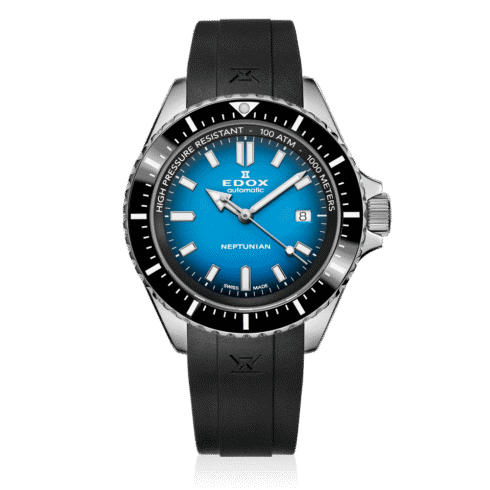
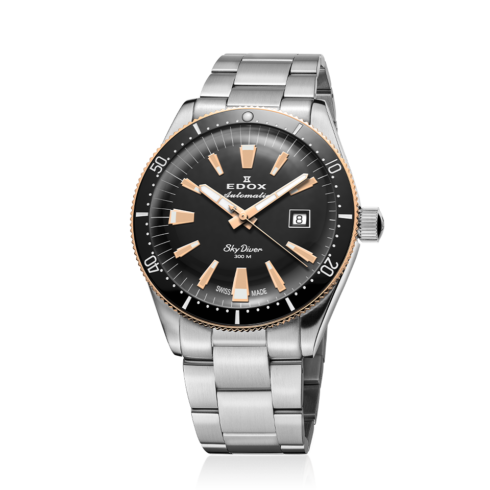
North America already knows the hourglass logo. Retailers here have sold and serviced it quietly for years. What’s changed is the depth behind it. Flagship pieces like the Hydro-Sub Date Automatic Chronometer and the Neptunian line now carry Swiss federal COSC certification. That means fifteen days of testing across five positions and three temperatures. Only then can a movement legally call itself a chronometer. The Neptunian carries a 1,000-metre rating, while the SkyDiver line is built for dives to 300 metres. Edox has also rebuilt the collection around how watches actually sell today, so independent jewellers sit at the centre of the distribution plan, not around its edges.
Why does the timing favour independent jewellers right now?
The liveliest part of Swiss watchmaking isn’t at the top of the market. Instead, it’s the accessible mechanical bracket, roughly $1,000 to $5,000. Buyers here are graduating out of smartwatches and fashion labels. They arrive with a phone in hand, ready to verify whatever a salesperson tells them. They’re also unmoved by the logos their parents wore. A COSC certificate answers the engineering question before they ask it. Meanwhile, a founding story about a man and his wife’s pocket watch answers the other one: why this brand, and not the ten others on the same wall.
How should retailers plan the range on the floor?
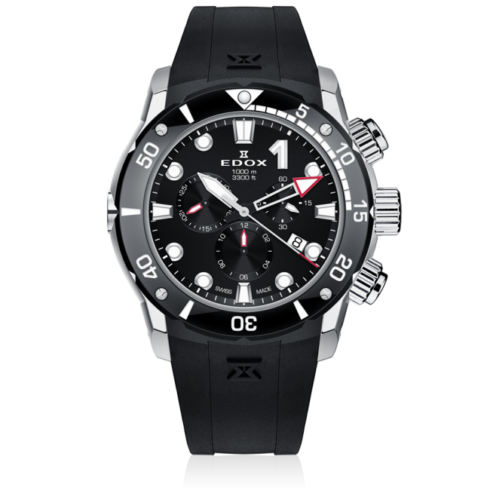
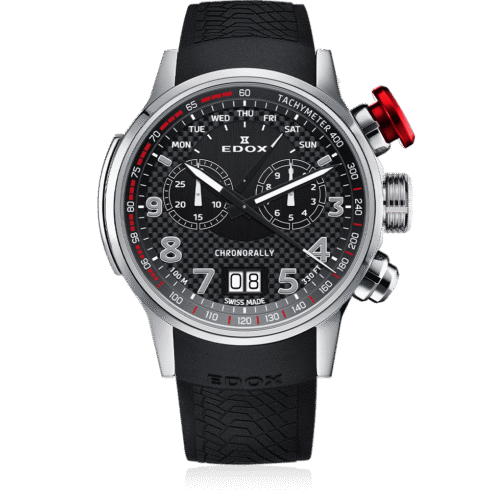
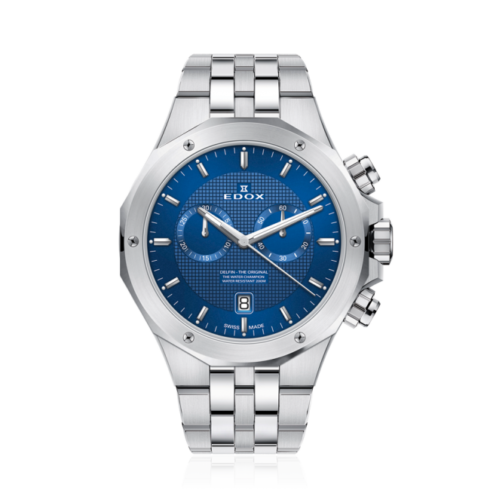
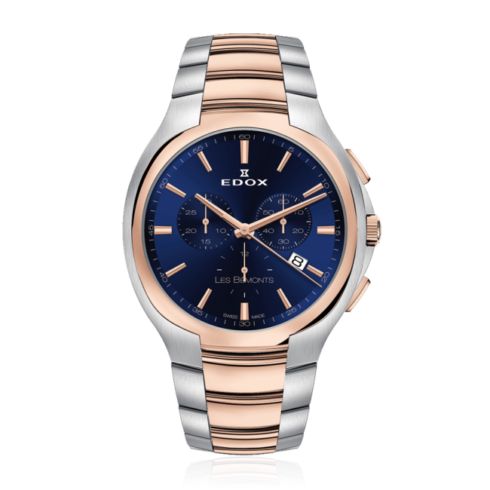
The collection splits cleanly by customer. Neptunian and SkyDiver carry the serious dive buyer to serious depths. CO-1 and Chronorally match the motorsport crowd. The Delfin, the model that started the Water Champion nickname, dresses the heritage-sport shopper. Finally, a run of slim classics rounds out the case for a boardroom wrist. One rep, one order, four distinct customers covered. The gallery below shows the range: the Neptunian and SkyDiver on the dive side, the CO-1 and Chronorally for motorsport, the Delfin carrying the Water Champion heritage, and a slim Les Vauberts dress piece for the boardroom wrist.
The Canadian angle
Retailers who carried Edox in earlier years have a reason to look again. The design is sharper. The certification is harder. And the conversation now runs directly to a family business, not through a conglomerate’s regional layer. Retailers meeting the brand for the first time, on the other hand, inherit a simpler calculation. Distribution stays selective, which keeps prices honest and makes every authorized door worth something. Because of this, the open territory across North America won’t stay open indefinitely.
No one publicly tracks comprehensive sell-through data for the accessible Swiss segment in Canada or the United States, a real gap in the trade’s available intelligence. What’s visible instead is anecdotal but consistent. Stores that have leaned into this price bracket say it’s where their newest watch customers are coming from.
Edox exhibits at both 2026 editions of Time & Shine Expo: Edmonton, August 16 and 17, and Toronto, November 6 and 7. There, the brand will bring its current collection, its certification story, and a map of the territory that remains. A watchmaker once bet everything on the look on his wife’s face. That bet is still paying out. The house he founded answers to no one but itself, and it still treats a watch as a stand-in for the person it’s given to. So the second act belongs to the retailers ready to sell that story alongside him.
Frequently asked questions
How old is Edox and who founded it?
Christian Rüefli-Flury founded Edox in 1884 in Biel, Switzerland. He named the company after the ancient Greek word for the measuring of time.
Is Edox still independent?
Edox has been privately owned since 1983, when new owners bought it back and relocated it to Les Genevez in the Jura mountains, where it remains today. No large watch conglomerate ever absorbed it.
What does COSC chronometer certification mean for an Edox watch?
COSC is the Swiss federal chronometer testing body. To carry the “chronometer” designation, a movement must pass fifteen days of testing across five positions and three temperatures. Edox’s Hydro-Sub Date Automatic Chronometer and Neptunian collections carry this certification.
Where can Canadian retailers meet Edox in person?
Edox exhibits at both 2026 editions of Time & Shine Expo, Canada’s jewellery buying marketplace: Edmonton on August 16 and 17, and Toronto on November 6 and 7.
What price bracket does Edox sell into?
Edox sits in the accessible mechanical Swiss segment, roughly $1,000 to $5,000. That’s the bracket currently drawing the largest wave of new watch buyers graduating from smartwatches and fashion brands.
Sources: Edox official brand history; Edox 140th anniversary retrospective; Time & Shine Expo 2026 exhibitor directory.

Author: Canadian Jeweller Editorial Team
The editorial team of Canadian Jeweller Magazine, Canada’s jewellery industry publication since 1879. We report on retail strategy, diamonds and gemstones, watches, precious metals, technology, and the business of jewellery across Canada. Editorial inquiries: editor@canadianjeweller.com.


