







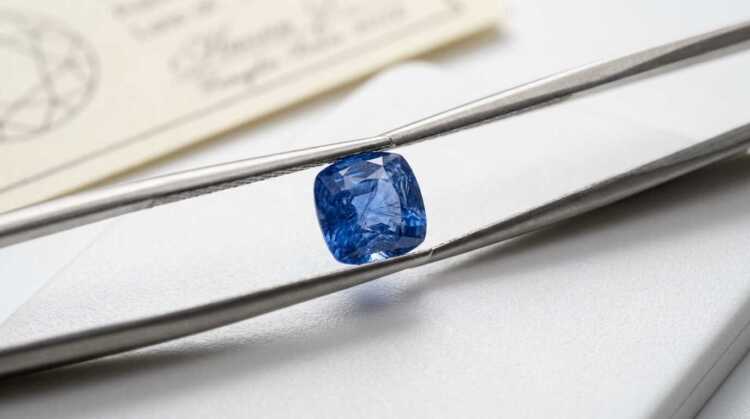
A gemstone origin premium is justified when three things line up: the stone’s colour genuinely shows the origin’s signature, a recognised laboratory report supports the origin call, and the client is buying the look rather than the story. If any one of the three is missing, the premium is resting on the label, not the stone.
Origin is not a surcharge for a passport. It is a proxy for a look — the hue, tone and saturation a region reliably produces. A Kashmir sapphire’s velvety blue, a Colombian emerald’s warm green, a Burmese ruby’s fluorescence command more because the colour behaves a certain way, and a credible laboratory can support the claim.
The question is arriving at your counter more often, and for good reason. Supply from the major coloured-stone mining regions has tightened over the past two years. Auction results keep resetting expectations. And traceability has moved from a nice-to-have to something clients ask about unprompted.
What makes an origin premium legitimate?
An origin premium is justified when three things line up:
- The colour genuinely reflects the origin’s signature — not just the label. The velvet, the glow, the fluorescence the origin is famous for should be visible in the stone itself.
- A recognised laboratory report supports the origin. An origin call is an expert opinion drawn from trace-element and inclusion data, not a certified fact. The leading laboratories say so themselves, and will state “origin undetermined” when the data is ambiguous — which is honesty, not failure.
- Your client is buying the look, not the story. Colour remains the single largest driver of a coloured stone’s value. The story should confirm what the eye already sees.
If the stone would sell on colour alone, you are buying colour. If the origin is doing the selling, make sure the report backs it.
How much is a gemstone origin premium worth?
Indicative wholesale patterns at comparable quality — a sense-check, not a price list:
| Stone | Premium origin | Typical premium over comparable material |
|---|---|---|
| Ruby | Burma (Mogok) | Roughly 100–200% over comparable Mozambique; “pigeon blood” with strong fluorescence drives it |
| Sapphire | Kashmir | Collector tier — fine unheated stones US$50,000–200,000+/ct at auction |
| Sapphire | Burma | 20–40% over comparable Ceylon |
| Emerald | Colombia | 30–50% over Zambian; a Muzo attribution can add 20–50% again |
| Paraíba tourmaline | Brazil | Often several multiples of comparable Mozambique material |
| Spinel | Burma / Mahenge | Both premium origins; top Mahenge neon red US$10,000–30,000+/ct |
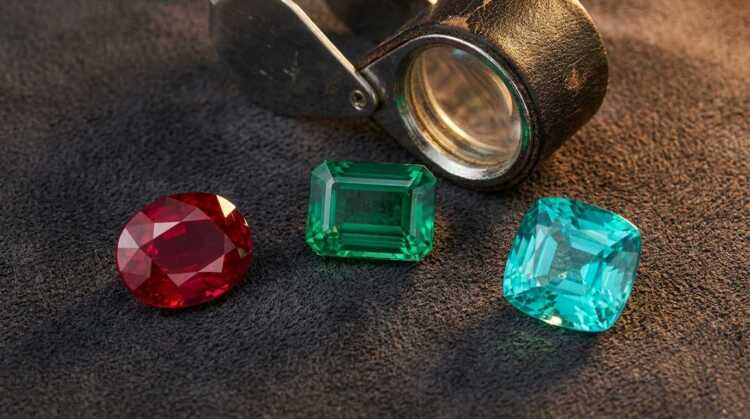
One premium cuts across all origins: no heat. Unheated corundum typically commands 40–200% over equivalent heated stones — often a larger factor than origin itself.
Which lab reports does the trade recognise — and what do they cost?
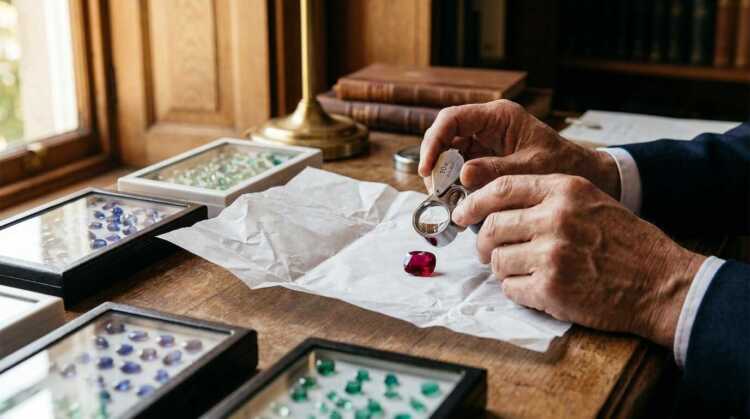
- The names the trade recognises: Gübelin, SSEF, GRS, AGL and GIA. For important stones, two concurring reports settle nerves on both sides of the counter.
- What it costs: identification reports start around CHF 330 at SSEF for smaller stones; adding origin can raise the fee by up to half. Gübelin reports run from roughly US$250 into the low thousands for larger goods.
- When to commission one: whenever origin is part of the asking price. As a working floor, any stone where the origin claim moves the price by more than the report costs — in practice, most goods above US$5,000.
When should you skip the origin premium?
Knowing when to pay the origin premium also means knowing when your client’s budget works harder elsewhere. The same look, honestly disclosed, often costs a fraction:
| If the brief says… | Consider… | What you gain |
|---|---|---|
| Burmese ruby | Fine Mozambique ruby | Comparable colour at roughly half the price or less |
| Kashmir sapphire | Fine unheated Ceylon or Madagascar | The velvety look at a small fraction of collector pricing |
| Colombian emerald | Fine Zambian emerald | 30–50% saving, frequently with better clarity |
| Brazilian Paraíba | Mozambique Paraíba | Larger, cleaner stones at far more accessible prices |

More trade guidance from this series lives in Byrex: the World of Colour on Canadian Jeweller.
Neither choice is wrong. A client who wants the Mogok stone and the report behind it is buying something real. A client who wants the finest colour their budget allows is buying something equally real. The jeweller’s value is knowing which conversation they are in — and having the goods for both.
FAQ
Is a gemstone origin report a fact or an opinion?
An opinion. Gübelin, SSEF and GIA all describe geographic origin as an expert opinion based on trace-element and inclusion data. Reputable labs state “origin undetermined” when data is inconclusive, and two respected labs can reach different conclusions on the same stone.
Do Burmese rubies really cost twice as much?
At comparable quality, Burmese (Mogok) rubies typically trade 100–200% above stones from other origins, driven by the pigeon-blood colour and strong fluorescence associated with Mogok material.
Are Colombian emeralds better than Zambian emeralds?
Not better — different. Colombian stones carry a 30–50% price premium for their warm, luminous green; Zambian emeralds offer a cooler, often cleaner green at a significantly lower price.
Does an unheated stone matter more than origin?
Often, yes. Unheated corundum commands a 40–200% premium over equivalent heated stones — frequently a larger value factor than origin.
Byrex has sourced coloured gemstones to origin and budget since 1988 — origin-reported stones and colour-first alternatives, side by side. Ask us for a current price list. Dundas Square, Toronto. Colour is Primary.

Author: Olivier Fel.
Olivier Felicio is the founder and publisher of Canadian Jeweller Magazine, Canada's jewellery business publication since 1879. He writes on retail strategy, market data, trade policy and the commercial side of the Canadian jewellery and watch trade, and hosts Time and Shine, Canada's jewellery buying event. Contact: olivier@canadianjeweller.com.


