







147 Years of Canadian Jewellery Design · Part 1 of 5
- Part 1: The Engraved Cuff (you are here)
- Part 2: Metal With a Past (publishes Tuesday 29 September)
- Part 3: The One Person Studio (publishes Wednesday 30 September)
- Part 4: Stones With a Canadian Address (publishes Thursday 1 October)
- Part 5: The Nation’s Jewel (publishes Friday 2 October)
The Haida silver bracelet is the longest running idea in Canadian jewellery design. Haida smiths hammered American silver dollars into engraved crest cuffs in the 1880s, Bill Reid carried the form into gold after 1954, and Indigenous jewellers still build on it today.
On 24 November 2006, a silver bracelet crossed the block at Heffel in Vancouver. Charles Edenshaw had made it around 1885, hammering coin silver into a band and engraving a shark across its face. It sold for $51,750. Inside the band, however, was a second story. An inscription recorded that Bill Reid had repaired the piece in 1975, so the master and his most famous heir sat inside one object.
This week The New York Times marked 175 years by tracing fashion trends through its archive. Canadian Jeweller has published since September 1879, so we are running the same exercise on our own trade across five parts. Each part follows one idea that keeps returning to Canadian jewellery, with dated entries drawn from museums, archives and public records. The first is the oldest.
What is a Haida silver bracelet?
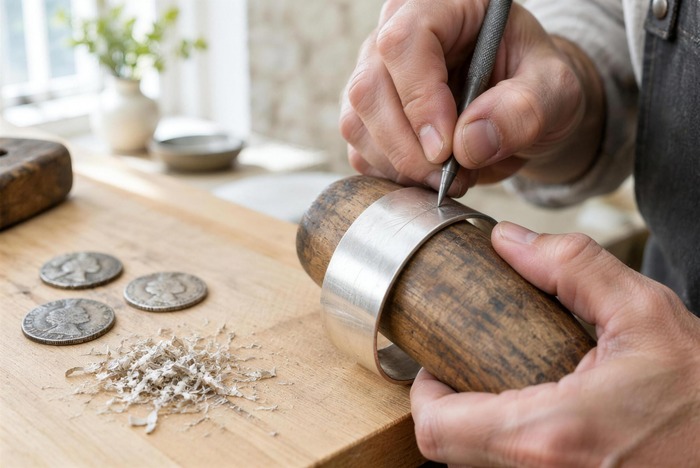
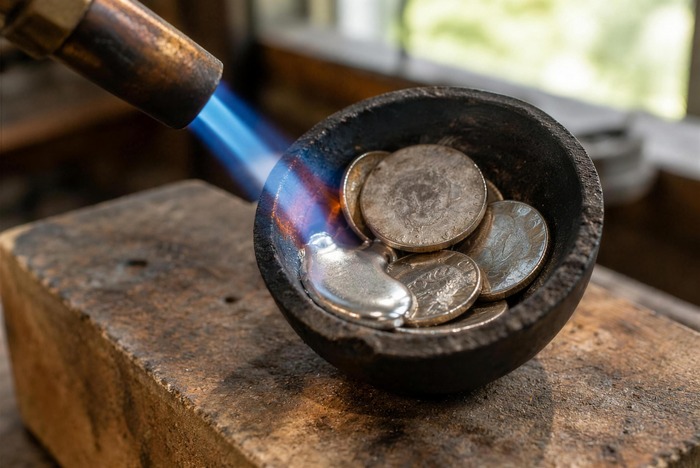
It is a band of silver or gold, engraved with a family crest in the formline style of the Northwest Coast. According to the Canadian Museum of History, Haida smiths melted and pounded down American silver dollars to make them. Heffel’s catalogue notes describe the next steps: the metal was shaped around a wooden mould, then engraved while already curved. As a result, the design was cut onto a round surface rather than flat stock, which is far harder than it sounds.
The bracelets also carried meaning beyond ornament. In the late nineteenth century, missionaries discouraged tattooing, so crests moved from skin to silver. Meanwhile, an 1884 amendment to the Indian Act banned the potlatch, and it stayed banned until 1951. The museum describes the bracelets of that period as a way of showing resistance against cultural oppression.
The Dictionary of Canadian Biography adds an important nuance. Edenshaw sold argillite and wood carvings to outsiders, yet it finds no evidence he made silver or gold jewellery for them. His bracelets were made for Haida families. Nevertheless, many later passed into collectors’ hands, which is how they reached museums.
How has the engraved cuff returned across 140 years?
- 1884. The potlatch ban is written into the Indian Act. Bracelets become one of the few visible ways to wear a crest.
- Circa 1885. Edenshaw engraves the shark cuff that Heffel will sell in 2006.
- Circa 1890. Edenshaw makes a bracelet from melted coins, now held by the Seattle Art Museum. A cleric of the time calls him the first Haida artist to work silver and gold.
- 1941. The Denver Art Museum buys an Edenshaw bracelet, object 1941.137, only half an inch wide. It arrived through the collector George T. Emmons.
- 1948. Bill Reid, then a CBC radio announcer, starts studying goldsmithing at night at the Ryerson Institute in Toronto. Later he trains at the Platinum Art Company, which he called his only real education.
- 1954. After his grandfather Charles Gladstone dies in Skidegate, Reid holds two of Edenshaw’s gold bracelets. His career turns on that moment.
- Circa 1955. Reid makes the Hinged Raven Bracelet in gold, now at the UBC Museum of Anthropology. He adds European hinges to a Haida form.
- 1979. Robert Davidson engraves a silver killer whale bracelet, now in the Canadian Museum of History.
- 2014. Erin Brillon, of Haida and Cree descent, founds Totem Design House. It works with Chief Andy Everson and gives 10 per cent of profits to the Copper Legacy society.
- 29 February 2024. A Reid silver bracelet from about 1956 sells at Heffel for $58,250, roughly 3.6 times its high estimate.
Reid put the whole cycle into one line: “every time the vandals melt down the shiny baubles of our past, the goldsmith puts them together again in a different form.”
What are Haida bracelets worth today?
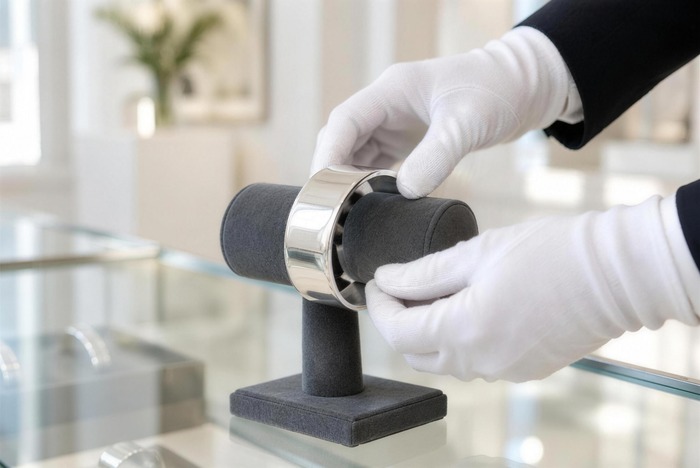
The two Heffel results below show where the market has moved. Notably, a 1950s Reid cuff has now outsold the 2006 price of an Edenshaw cuff made seventy years earlier.
| Piece | Sale | Estimate | Result |
|---|---|---|---|
| Charles Edenshaw, Haida Shark, coin silver, circa 1885 | Heffel, 24 Nov 2006 | $40,000 to $60,000 | $51,750 |
| Bill Reid, Frog Looking at his Reflection, sterling, circa 1956 | Heffel, 29 Feb 2024 | $12,000 to $16,000 | $58,250 |
Contemporary makers are pricing with the same confidence. Tania Larsson, a Gwich’in jeweller in Yellowknife who works in gold, silver, muskox horn and caribou fur, told The Narwhal in 2019 that she would not cut prices: “It’s not because someone is brown that their artwork should be less valued.”
How big is the Indigenous jewellery market in Canada?
Canada does not publish a figure for Indigenous jewellery alone. The closest measure is a 2020 study for the National Indigenous Economic Development Board. It found Indigenous art contributed $1.019 billion to the economy in 2018, including $486 million in direct GDP, and supported 23,390 full time jobs. The same study found the average piece of jewellery sold through Facebook went for $39.25.
That gap between $39.25 and $58,250 is where the risk sits. In 2019, The Discourse checked 40 Vancouver tourist shops and found 75 per cent sold fake or mixed stock. Nearly 60 per cent of the items carried no artist information. Furthermore, Canada has no law like the American Indian Arts and Crafts Act of 1990, which carries penalties of up to five years and US$250,000 for individuals. That American law protects only tribes based in the United States. The strongest Canadian tool remains the Igloo Tag, a trademark for Inuit art created in 1958 and transferred to the Inuit Art Foundation in July 2017.
What should the trade do with the engraved cuff now?
Buy direct and document it. With no Canadian statute in place, provenance is the retailer’s only protection. Keep the artist’s name, nation, signature or hallmark and a direct invoice on file for every piece.
Price it as fine jewellery. The auction record shows engraved cuffs by named makers behave like art, not souvenirs. Therefore, present them in the showcase beside your best gold, with the maker’s story on a card.
Paper every piece that leaves the country. American law will not protect a Canadian maker’s work. A written artist statement travels with the piece and protects the buyer, the maker and the store.
Edenshaw’s bracelets began as melted coins. The next part of this series follows that metal, and why reusing it has become the most important decision in the trade.
Next in the series: Part 2, Metal With a Past, publishes Tuesday 29 September.
Frequently asked questions
Who was Charles Edenshaw?
Charles Edenshaw, or Daxhiigang, was a Haida artist born around 1839 in Skidegate who died in 1920. He is regarded as the first Haida artist to work silver and gold, and his bracelets are held by museums in Canada and the United States.
Why were Haida bracelets made from coins?
Silver dollars were the most available source of silver on the Northwest Coast in the late nineteenth century. Smiths melted and hammered them into bands before engraving a family crest.
What is a Bill Reid bracelet worth?
A Reid sterling bracelet from about 1956 sold at Heffel on 29 February 2024 for $58,250, far above its $12,000 to $16,000 estimate.
How can a retailer confirm Indigenous jewellery is authentic?
Buy directly from the artist or an Indigenous owned business, and keep the artist’s name, nation, signature and invoice. For Inuit art, look for the Igloo Tag, which the Inuit Art Foundation now manages.
Who designed the Vancouver 2010 Olympic medals?
Corrine Hunt, a Komoyue and Tlingit artist, created the orca and raven artwork, and Omer Arbel designed the form. The Royal Canadian Mint struck 615 Olympic and 399 Paralympic medals, each carrying a different section of her design.
Sources: Canadian Museum of History, Haida bracelet · Dictionary of Canadian Biography, Charles Edenshaw · Denver Art Museum, 1941.137 · Seattle Art Museum · Heffel sale record, Haida Shark · Heffel, Bill Reid results · Art Canada Institute, Bill Reid biography · Art Canada Institute, Hinged Raven Bracelet · The Canadian Encyclopedia, Potlatch · Totem Design House · The Narwhal, Tania Larsson · NIEDB, Economic Impacts of Indigenous Art in Canada · The Discourse, fake art investigation · Policy Options · Government of Canada, Igloo Tag transfer · Vancouver 2010 medals release · The New York Times

Author: Canadian Jeweller Editorial Team
The editorial team of Canadian Jeweller Magazine, Canada’s jewellery industry publication since 1879. We report on retail strategy, diamonds and gemstones, watches, precious metals, technology, and the business of jewellery across Canada. Editorial inquiries: editor@canadianjeweller.com.


