







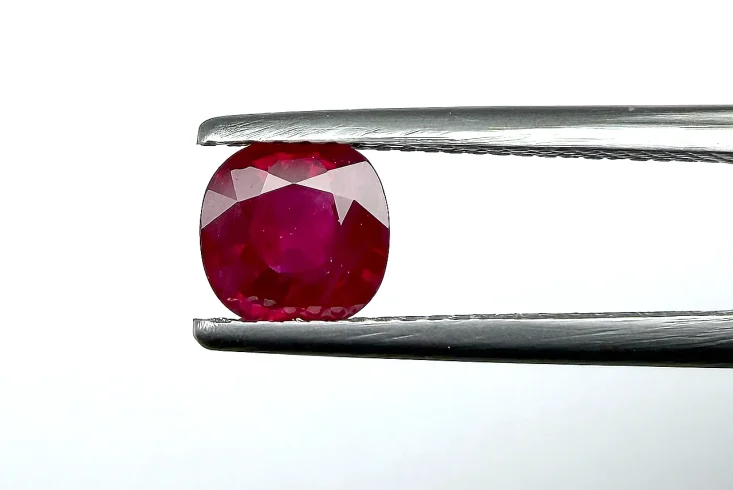
Sponsored content: Byrex Gems Inc
Fine natural rubies are becoming harder to replace. For Canadian jewellers, global scarcity and the exchange rate make every buying decision more critical.
A customer falls in love with a ruby ring. Eight months later, she returns for a matching pendant.
The jeweller calls the supplier and discovers that a comparable ruby now costs considerably more. Worse, the same colour may no longer be available.
That is how rising ruby prices are reaching Canadian jewellery counters. The issue is not simply that “rubies cost more.” The real challenge is that beautiful, saleable stones are becoming harder to replace.
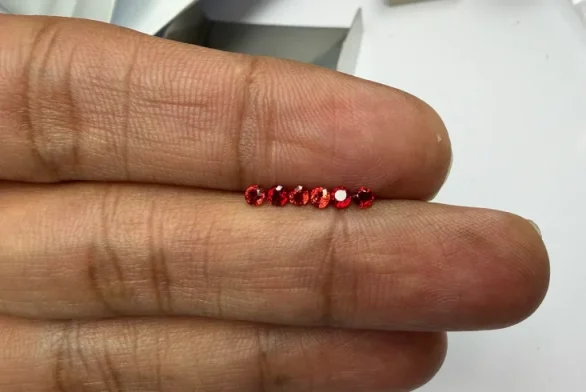
Not every ruby is rising equally
There is no universal ruby price. Commercial stones, heavily treated material and exceptional natural rubies belong to very different markets.
The strongest pressure is on stones with the combination buyers want most:
- Rich, lively red colour
- Good transparency
- Attractive cutting
- Limited or no treatment
- Useful sizes for fine jewellery
- Reliable laboratory documentation
Mining produces plenty of red corundum. It produces far fewer stones with all these qualities together. As size increases, the choice narrows quickly.
Why supply is tightening
Myanmar has historically supplied some of the world’s most celebrated rubies, but ongoing conflict continues to complicate access and responsible sourcing.
Mozambique has become one of the most important modern sources. However, illegal mining, smuggling and interruptions around the Montepuez region have affected premium production.
At the same time, demand is broadening. International jewellery houses, independent designers and collectors are competing for distinctive natural stones. Exceptional Mozambican rubies are also earning greater recognition as fine Burmese material becomes more difficult to obtain.
The result is a market in which ordinary goods may remain available, while exceptional stones command increasingly high prices.
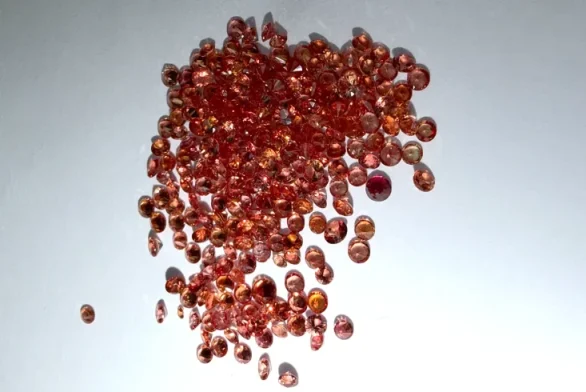
Canada feels the increase twice
Most international gemstones are traded in U.S. dollars. Canadian jewellers therefore face both the higher international price and the currency conversion.
At an exchange rate of approximately C$1.39 for US$1, a US$5,000 ruby costs close to C$6,950 before secure shipping, insurance, brokerage and applicable taxes.
Loose worked rubies currently enter Canada duty-free, but duty-free does not mean inexpensive. The exchange rate alone can change the viability of a design or erase the margin in an older quotation.
This also creates a replacement-cost problem. A jeweller may own a ruby purchased two years ago at an excellent price, but selling it based only on its original invoice can make replacing that inventory difficult—or impossible.
For bespoke jewellery, start with the stone
Some bespoke pieces begin with a sketch. The unforgettable ones begin with the stone.
Designing around a theoretical ruby is increasingly risky. By the time the client approves the drawing, the right colour, size or price may have disappeared.
A stronger process is to select the ruby first. The designer can then build around its proportions, colour and personality. This gives the client a more distinctive piece and protects the jeweller from quoting a stone that cannot be secured later.
Treatment must also be explained clearly. Heated, untreated, fracture-filled and diffusion-treated rubies do not carry the same value. As prices rise, laboratory reports and accurate disclosure become even more important.
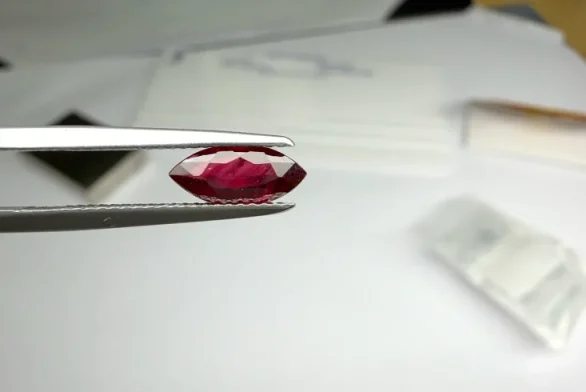
Buy with purpose, not panic
Rising prices do not mean every ruby should be purchased immediately. They make selection more important.
Canadian jewellers should:
- Review existing ruby inventory at replacement cost
- Put expiry dates on quotations involving imported stones
- Confirm treatments before presenting a stone
- Secure matched pairs and calibrated layouts early
- Request laboratory reports for important rubies
- Consider a smaller stone with stronger colour instead of sacrificing beauty for size
Good design can also protect the budget. Clusters, halos, asymmetric settings and ruby-and-diamond combinations can create visual impact without requiring a large centre stone.
Byrex brings international ruby sourcing home
Canadian designers should not have to travel around the world to find the one stone that completes a piece. That is Byrex’s role.
Since 1988, Byrex Gems has sourced coloured gemstones and fancy colour diamonds internationally, bringing selected material to its Toronto office for Canadian jewellery professionals.
Designers can see the stones in person, compare colour and proportion, understand treatments and documentation, and choose the ruby that works for the design—not simply the first stone available at the requested weight.
In a tightening market, access matters. Experience matters more.
The best ruby is not always the largest or most expensive. It is the one with the colour, character and value that make the finished piece impossible to forget.
Contact info: info@byrex.com and (416) 947-1431
Sources
- Canada Border Services Agency, Customs Tariff 2026, Chapter 71
- Bank of Canada, Daily Exchange Rates
- Gemfields, Montepuez Ruby Mining and Market Updates
- Financial Times, Gemstone Colour Naming Clouds Collectors’ Market
- The Wall Street Journal, Gemfields Reports Ruby Auction at Record-High Prices


